
Sensu-chirashi, the scattered folding fans
Series: Exploring Obi Design
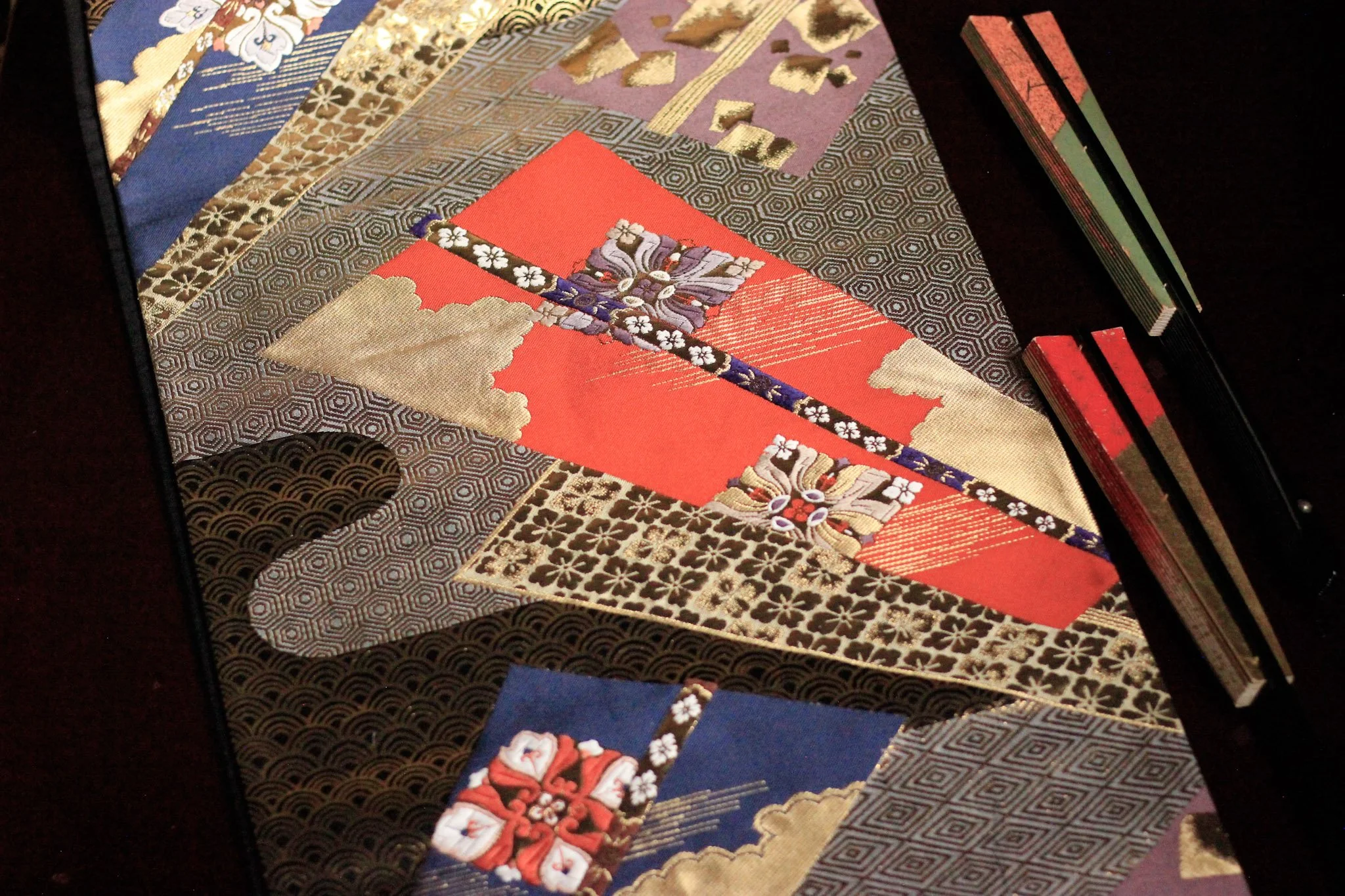
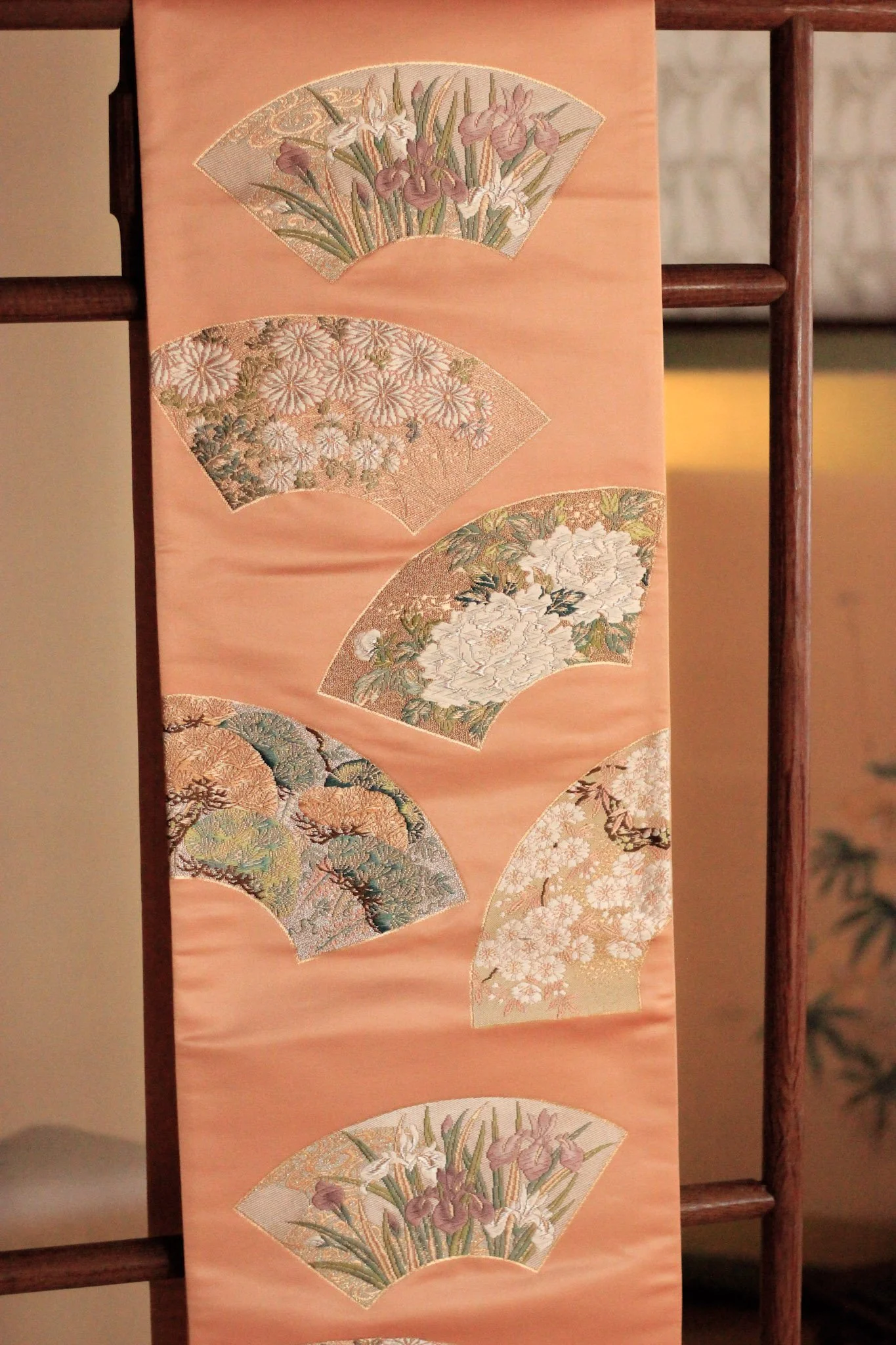
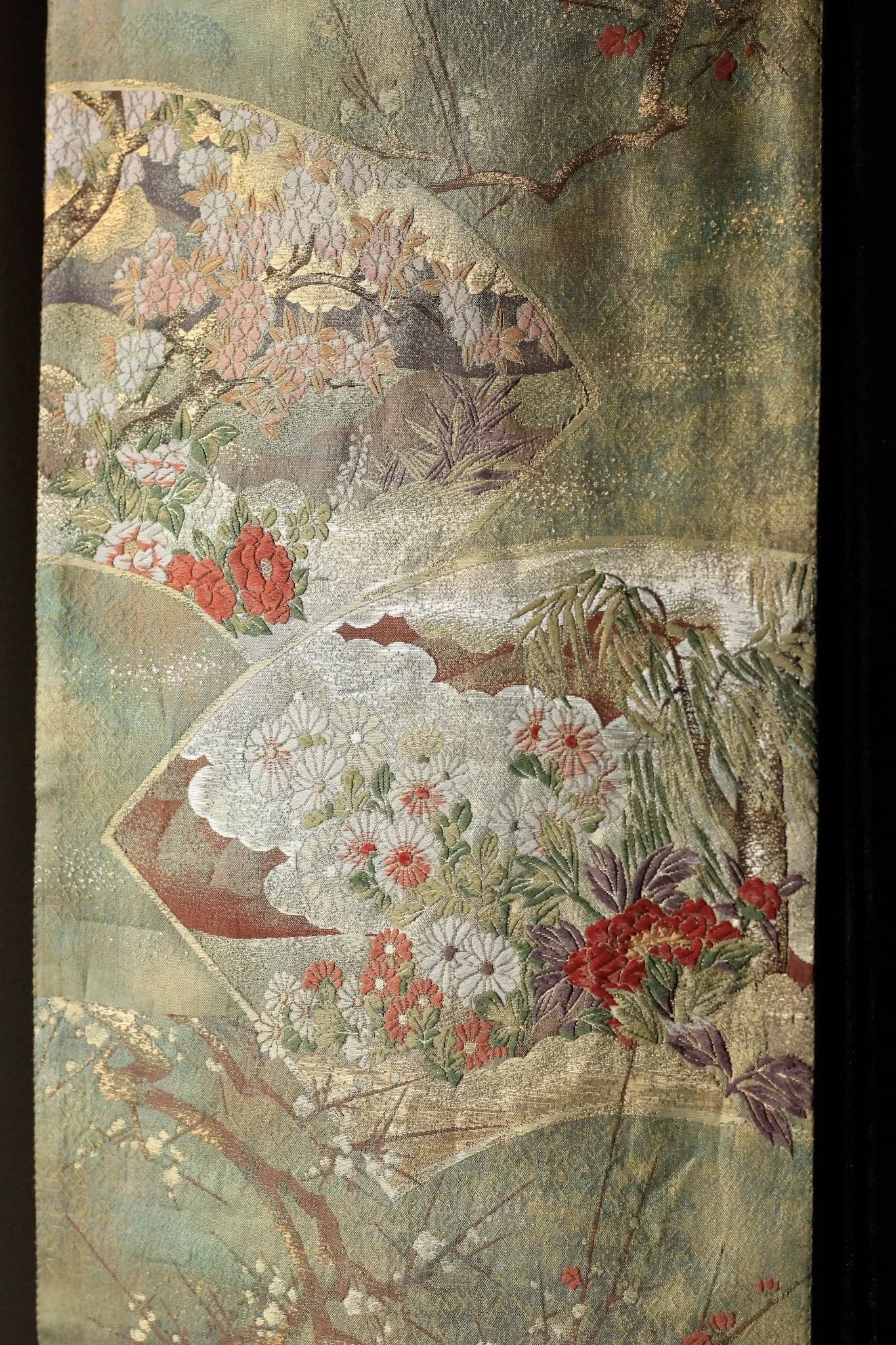
Vintage Fukuro Obi featuring small traditional motifs and folded fans scattered above them.
Among the many patterns found on traditional Japanese obi, I find Sensu-chirashi to be one of the most captivating. At first glance, it appears to be a series of beautifully arranged landscapes or scenes. Look a little longer, however, and you'll discover that each one is depicted within folding fans scattered across the fabric. Just like the real objects, each fan contains its own miniature world of flowers, landscapes, seasonal plants, or auspicious motifs, all woven into a single composition.
I love a pattern that rewards curiosity in this way: the longer you look, the more details you notice. So, let's take a closer look at a few Sensu-chirashi obi from my collection and discover why this centuries-old design remains one of the most ingenious compositions in Japanese textile art.
What does Sensu-chirashi mean?
Sensu (‘folding fan’ in Japanese) is a general term referring to all kinds of folding fans, but there are different kinds of folding fans for different kinds of purposes. For example, some are used for traditional dances or performances, some are mainly decorative, and some are used in the tea ceremony.
Chirashi means ‘scattered’ or ‘dispersed’. In Japanese, the word often describes elements that appear to be arranged freely while still creating a harmonious composition. A good example is a dish called Chirashi-zushi (scattered sushi). It’s made of vinegared rice and fresh ingredients beautifully arranged on top. Let me share below the delicious chirashi-zushi prepared at the Horenji temple in 2018, during my first artist-in-residence there. (Compliments to the chef, Scion Sasaki! Thank you for pleasing our palate as well as our eyes.)
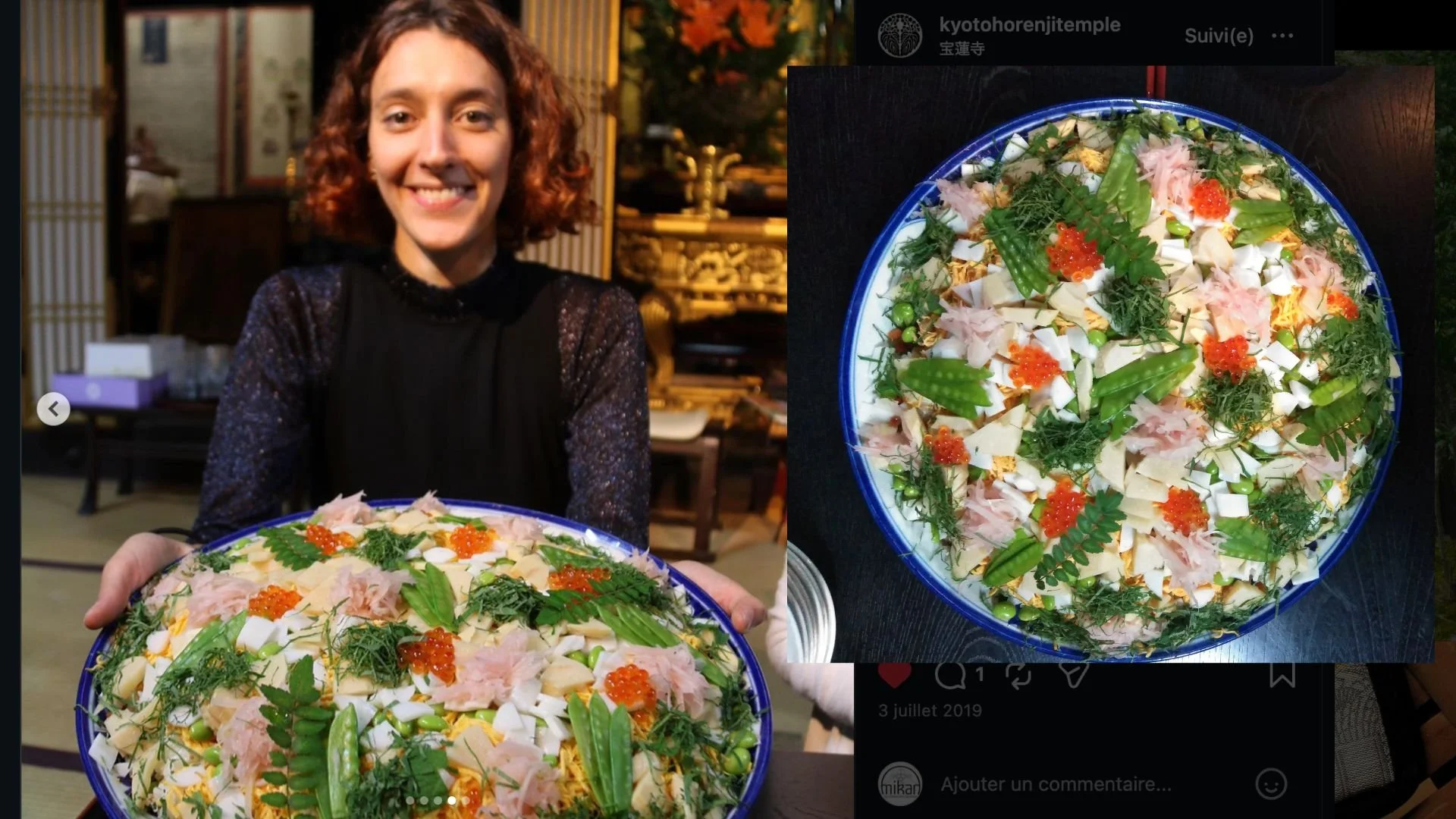
A bowl of chirashi-zushi, where beautifully scattered ingredients illustrate the same idea of harmonious composition found in Sensu-chirashi. This homemade version was served during my first artist residency at Hōrenji Temple in 2018.
Why Folding Fans?
Folding fans are beautifully crafted objects that can be used to make wind (of course), but are also very appreciated as decorative artworks, just like little paintings. They often represent natural scenery, seasonal flowers or famous landscapes. Folding fans originated in Japan and became an essential accessory of the Heian court. Beyond their practical use, they served as elegant works of art and even carried poems or private messages, making them closely associated with refinement, romance, and courtly culture.
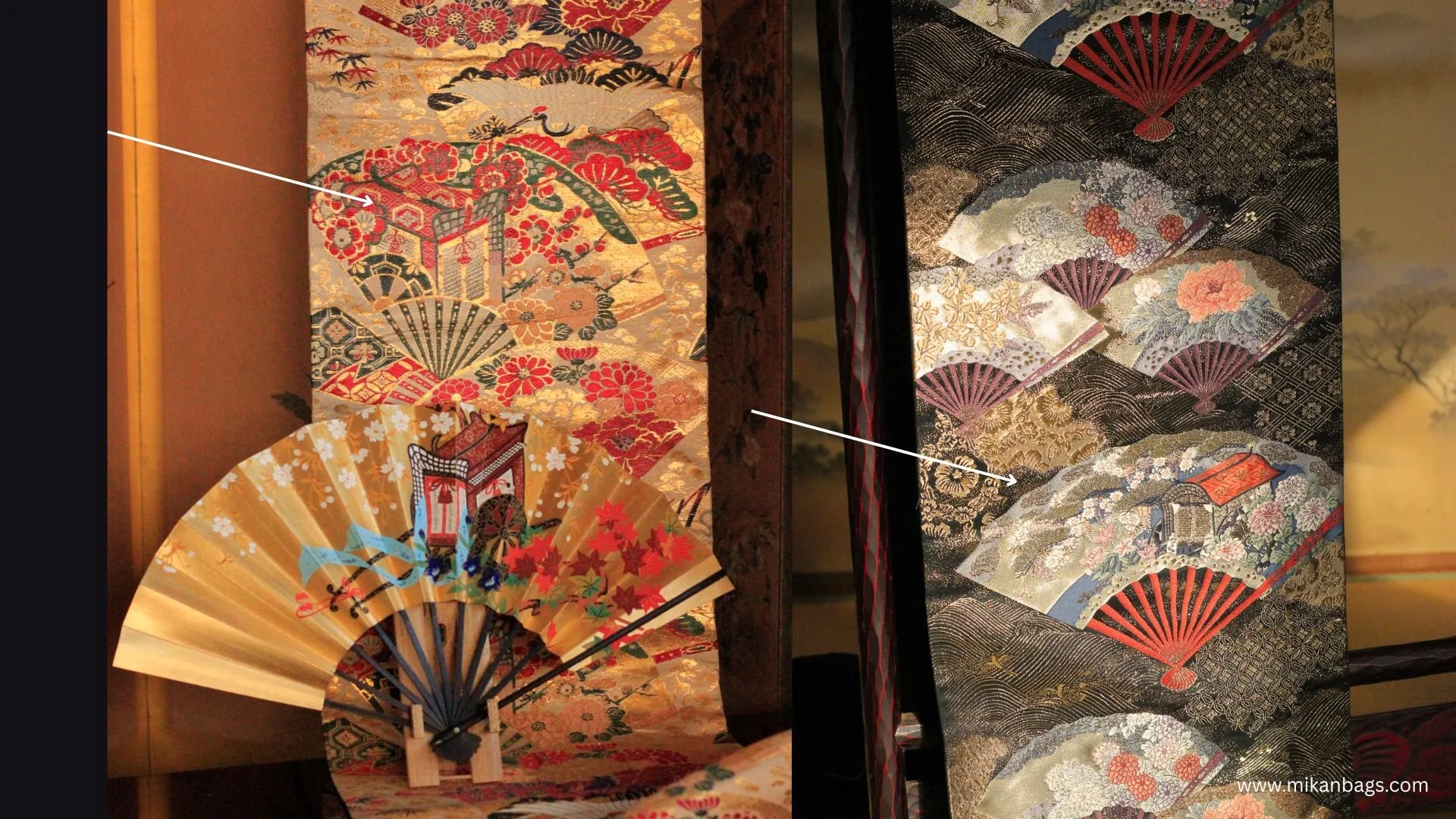
The true object, a gold folding fan decorated with a Gosho-guruma and flowers, shown with its representations on two different vintage silk obi.
Obi were not only designed to be beautiful; they also reflected the taste and aspirations of the wearer. Depicting an object as refined as a folding fan could suggest an appreciation for art and craftsmanship, as well as elegance, education, and cultivated taste.
The Design Itself
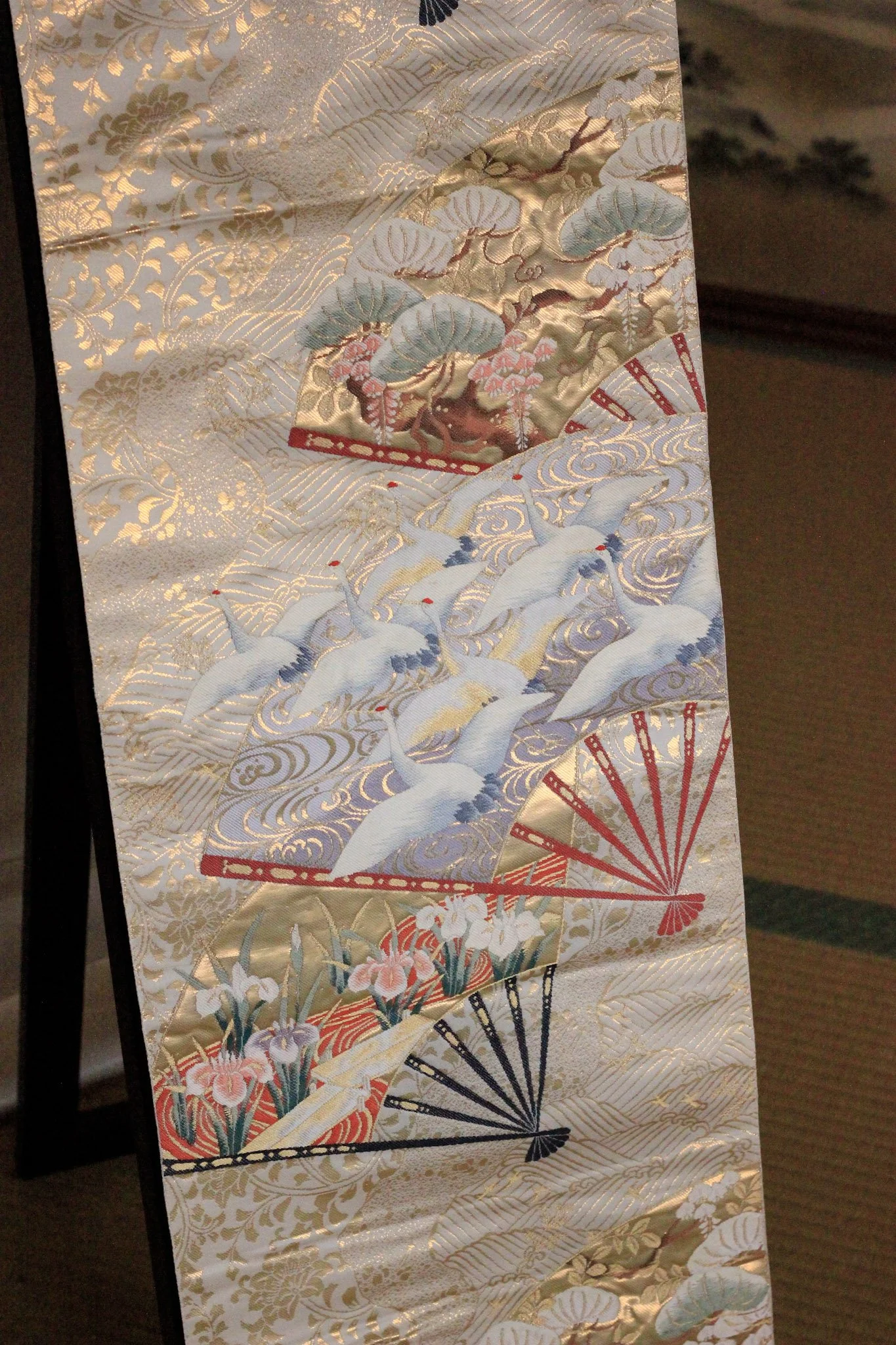
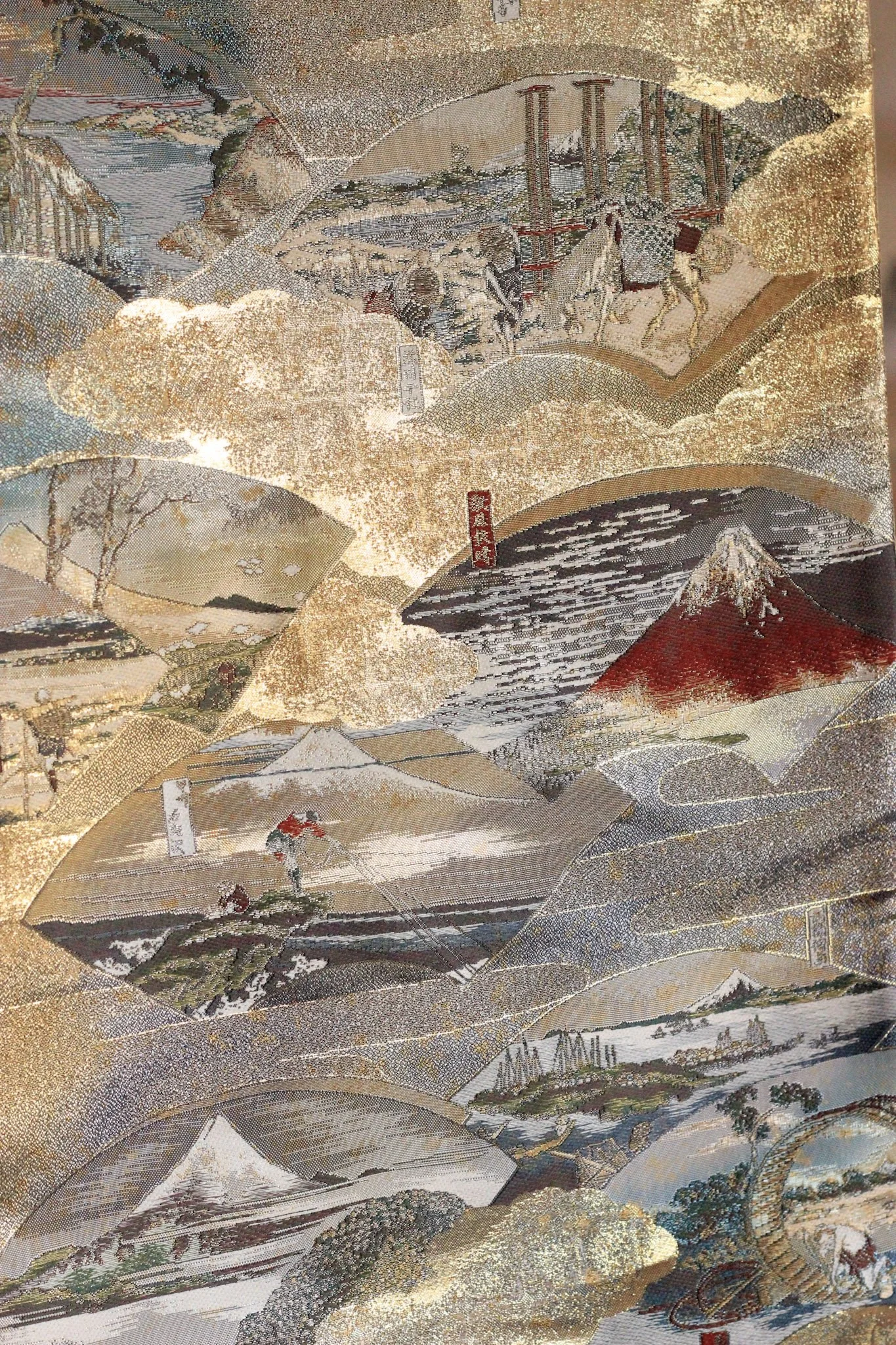
As I mentioned in the introduction, the folding fans are not always the stars of the show. More often, they serve as an elegant compositional device, allowing a wide variety of scenes to be displayed within a single design. Since traditional kimono motifs are largely inspired by nature and the world of arts and crafts, this layout makes it possible to bring together an extraordinary range of imagery without overwhelming the eye. An especially clever solution for the long, narrow proportions of an obi (see the right image below).
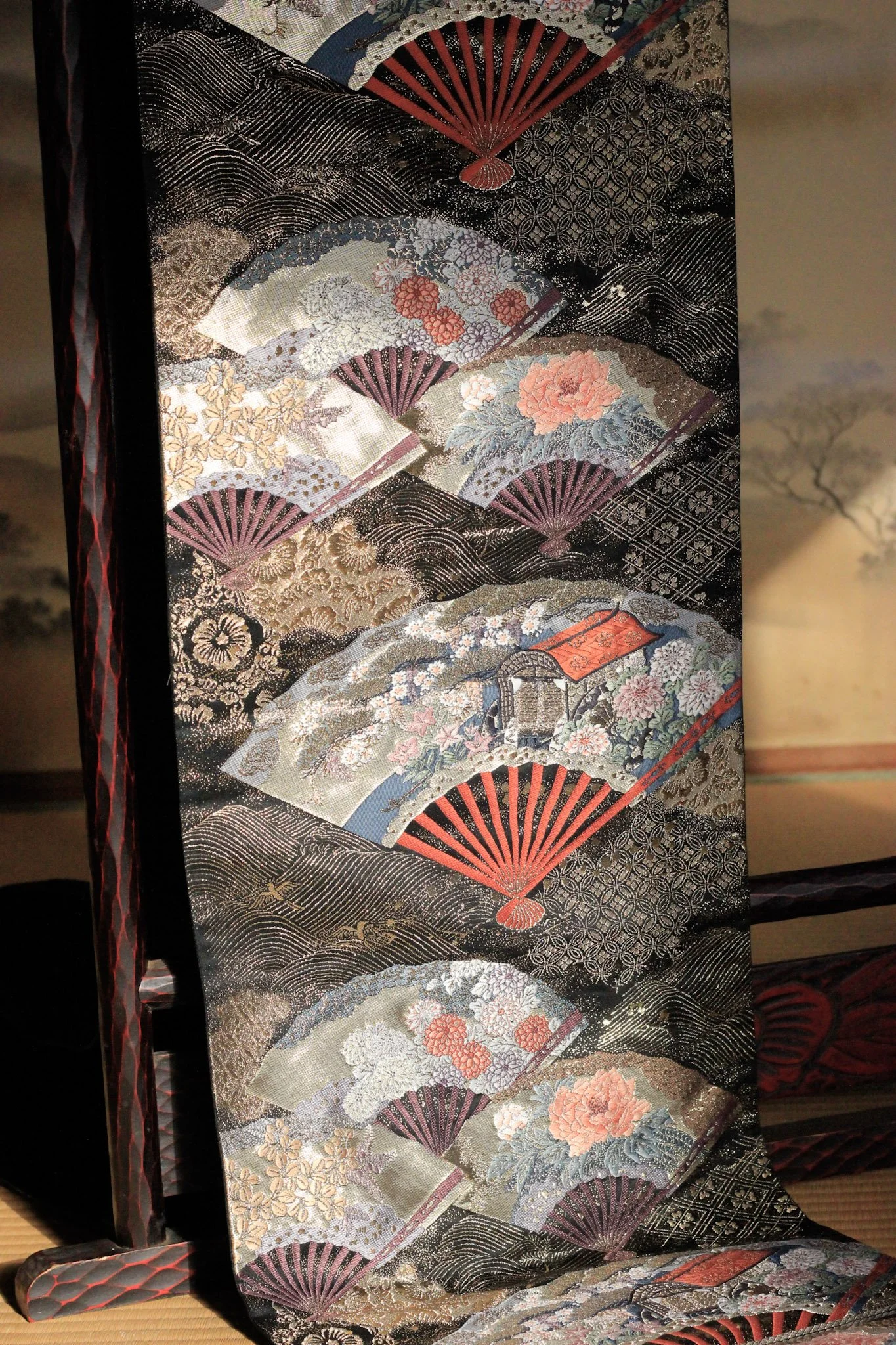
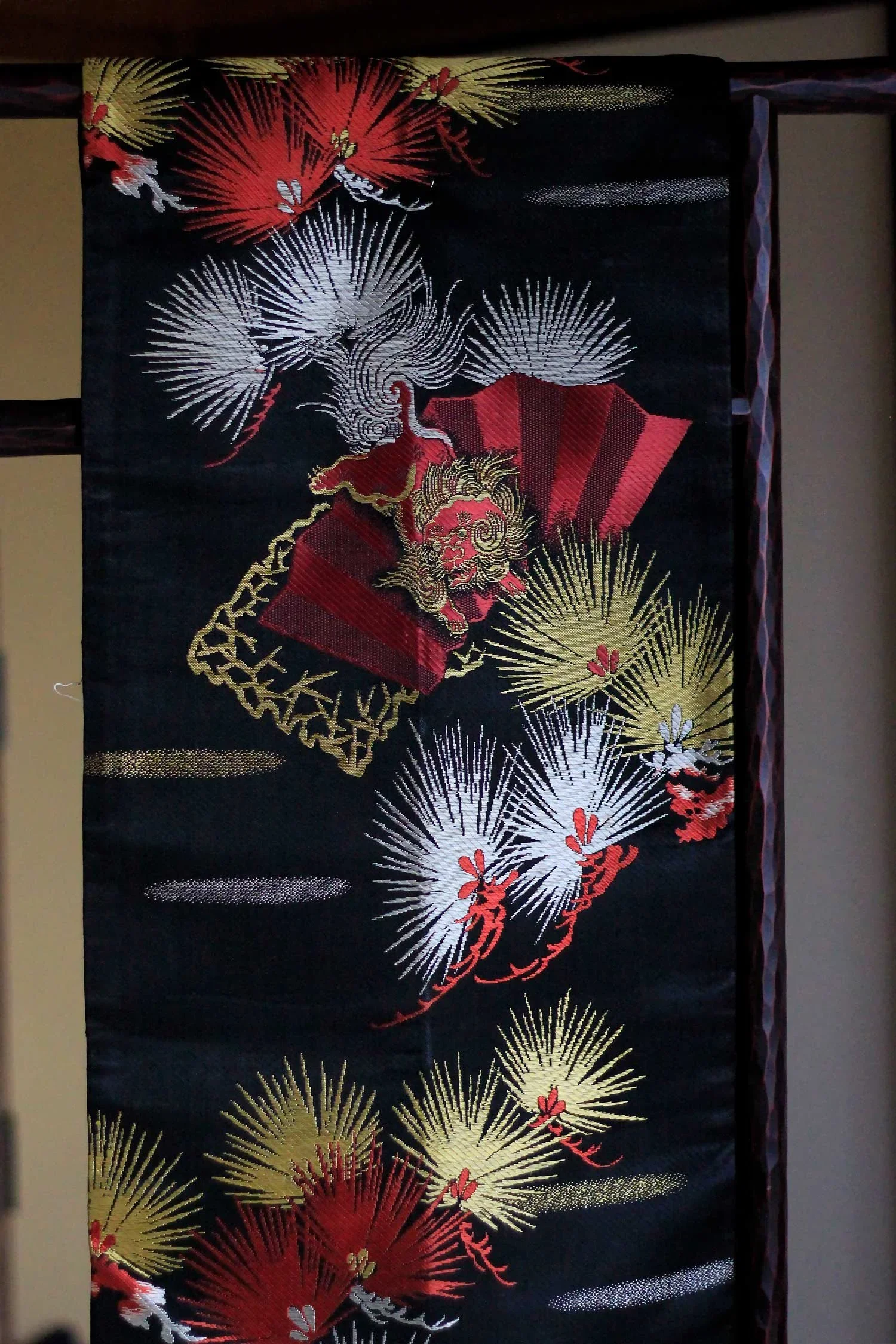
In other cases, however, the opposite happens: the fan shapes immediately catch your attention, and only afterwards do you discover the miniature worlds "painted" within them (see the left image below). The balance between these two approaches is part of what makes Sensu-chirashi such a fascinating design to explore.
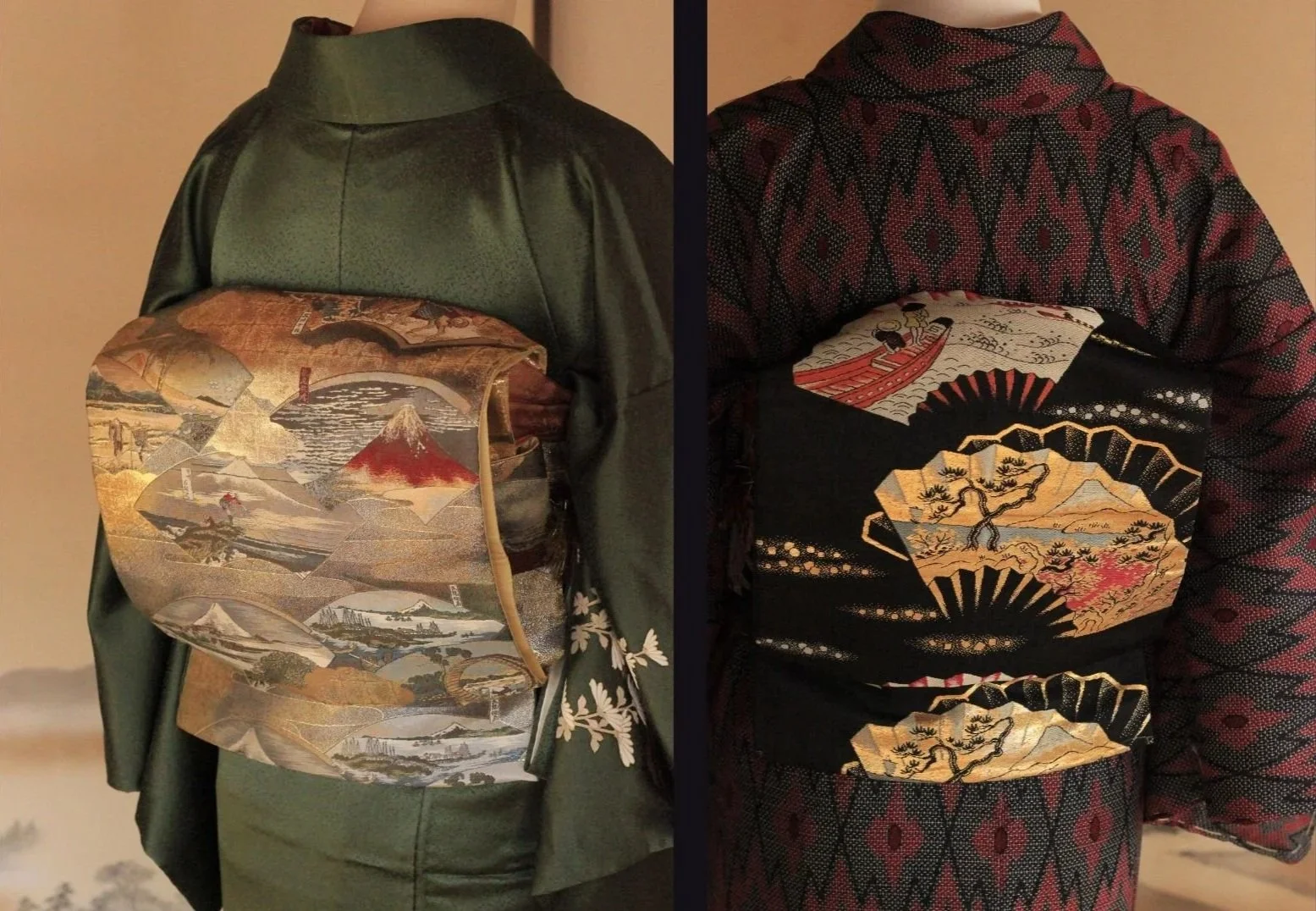
Two vintage silk obi decorated with folding fans featuring scenes inspired by Thirty-six Views of Mount Fuji by Katsushika Hokusai. On the gold obi (right), the fan shapes blend subtly into the overall composition, allowing the many landscapes to read as one harmonious design. On the black obi (left), the fans themselves become eye-catching frames, clearly separating each miniature scene.
Another detail about the gold obi that is worth noticing: the fans are represented as simple curved shapes, without any visible bamboo ribs. That's because they depict only the painted paper leaf of the fan, known as the senmen, before it is mounted onto its bamboo frame.
Sensu-chirashi in my Obi Collection
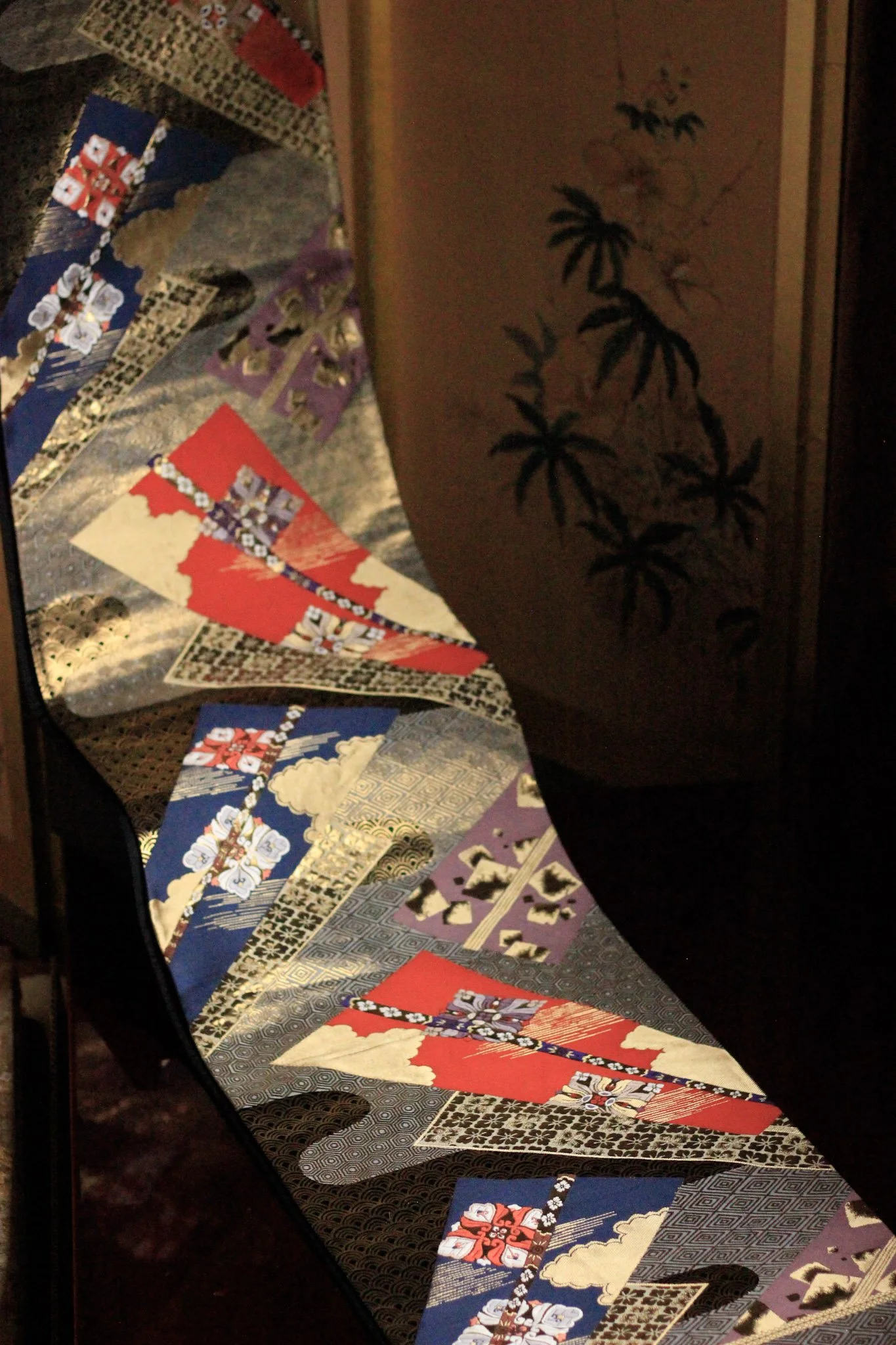
This article covers a small part of my discoveries, and each Obi that I find is unique and has a story of its own. If you’d like to dive in a bit deeper, I encourage you to click on one of the seven obi images below to read each fabric’s description, as I wrote more detailed stories about all of them.
From Obi to Bag
At last, let me share some recent bag creations transforming Sensu-chirashi Obi into functional everyday bags.
If you feel inspired to order yours, let me know! I can ship pretty much everywhere.
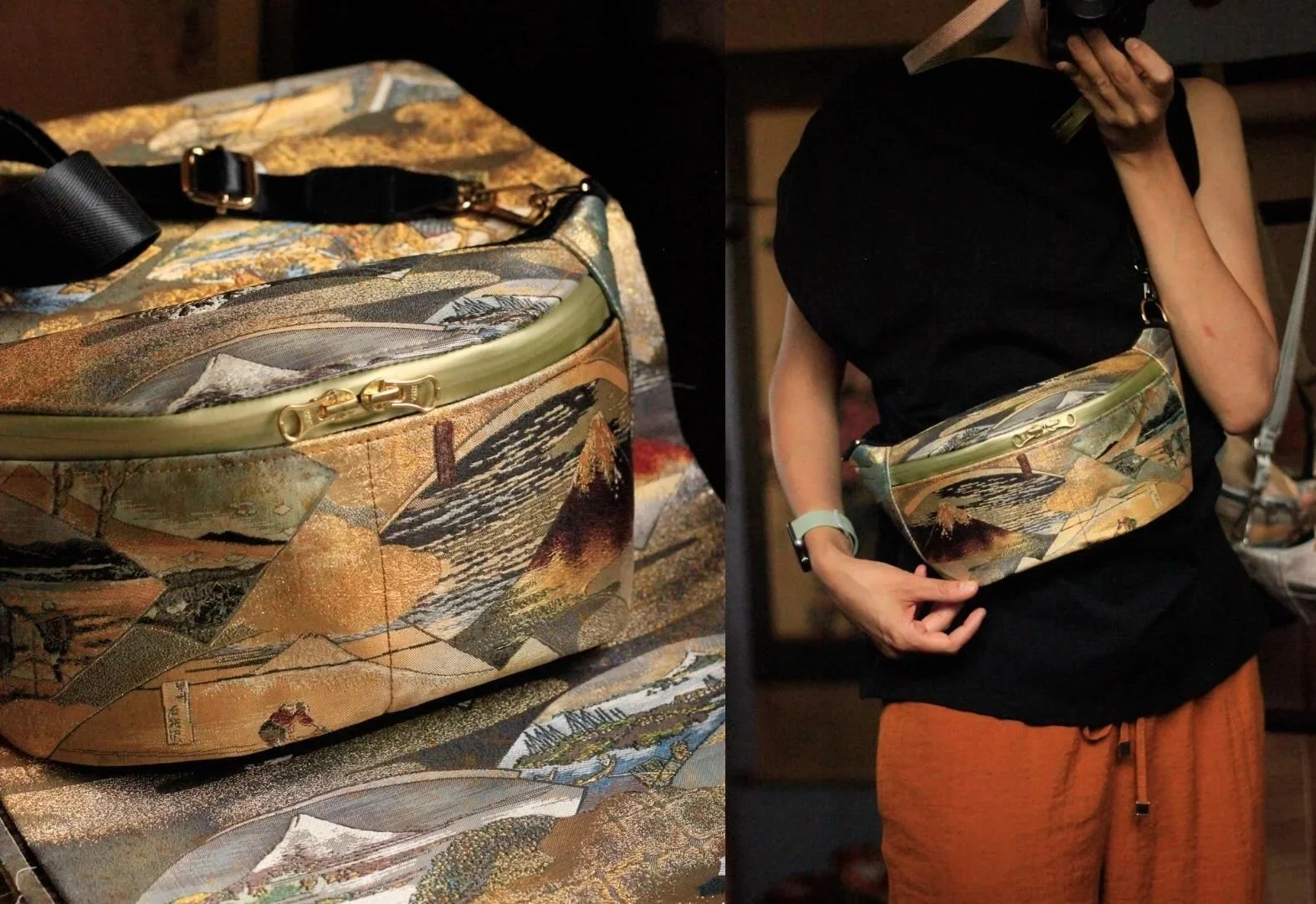
Bumbag with Mount Fuji views, from an interpretation of Thirty Six Views of Mount Fuji by Katsushika Hokusai. Available in our store.
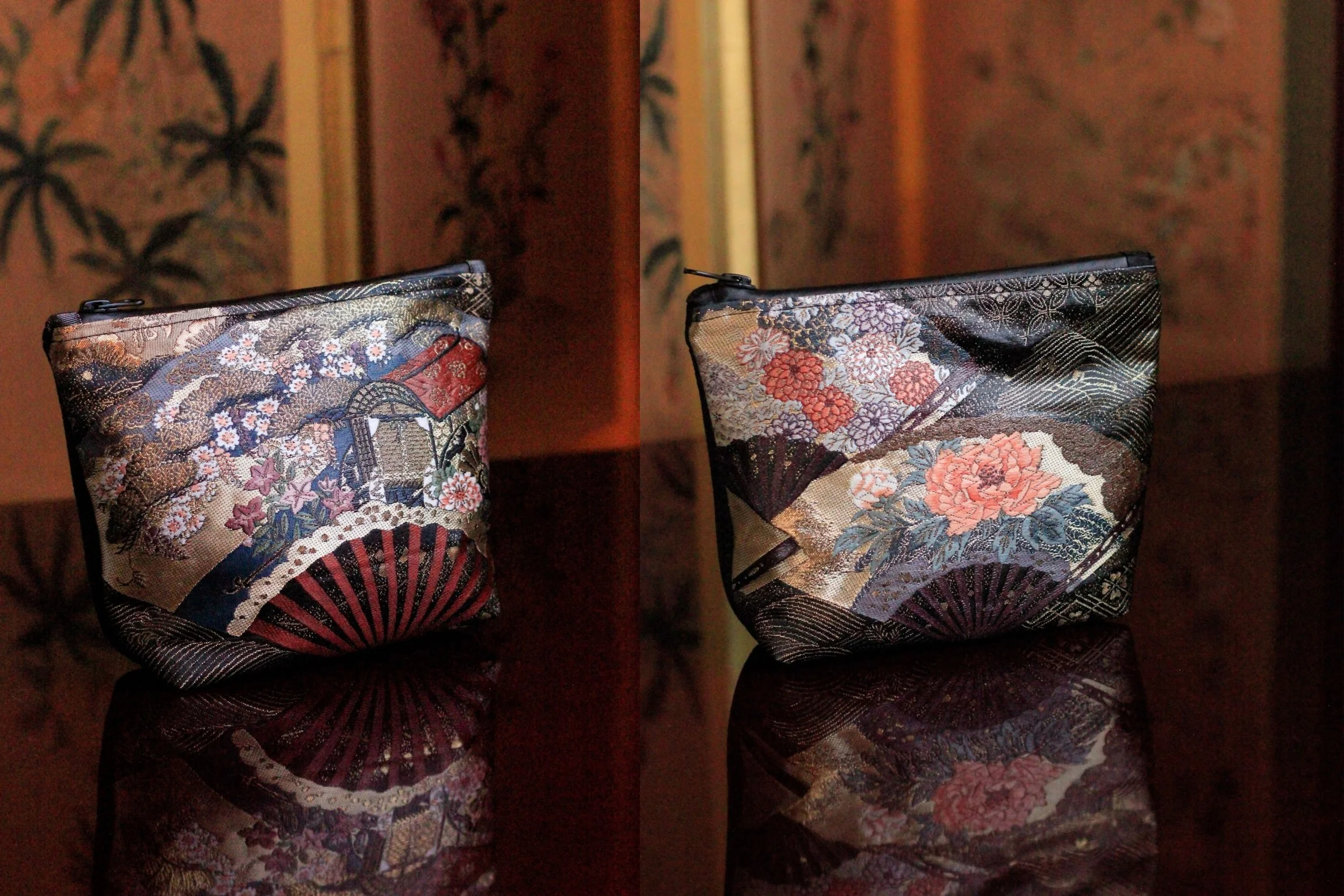
A set of Travel Pouches with floral folding fans. Custom ordered.
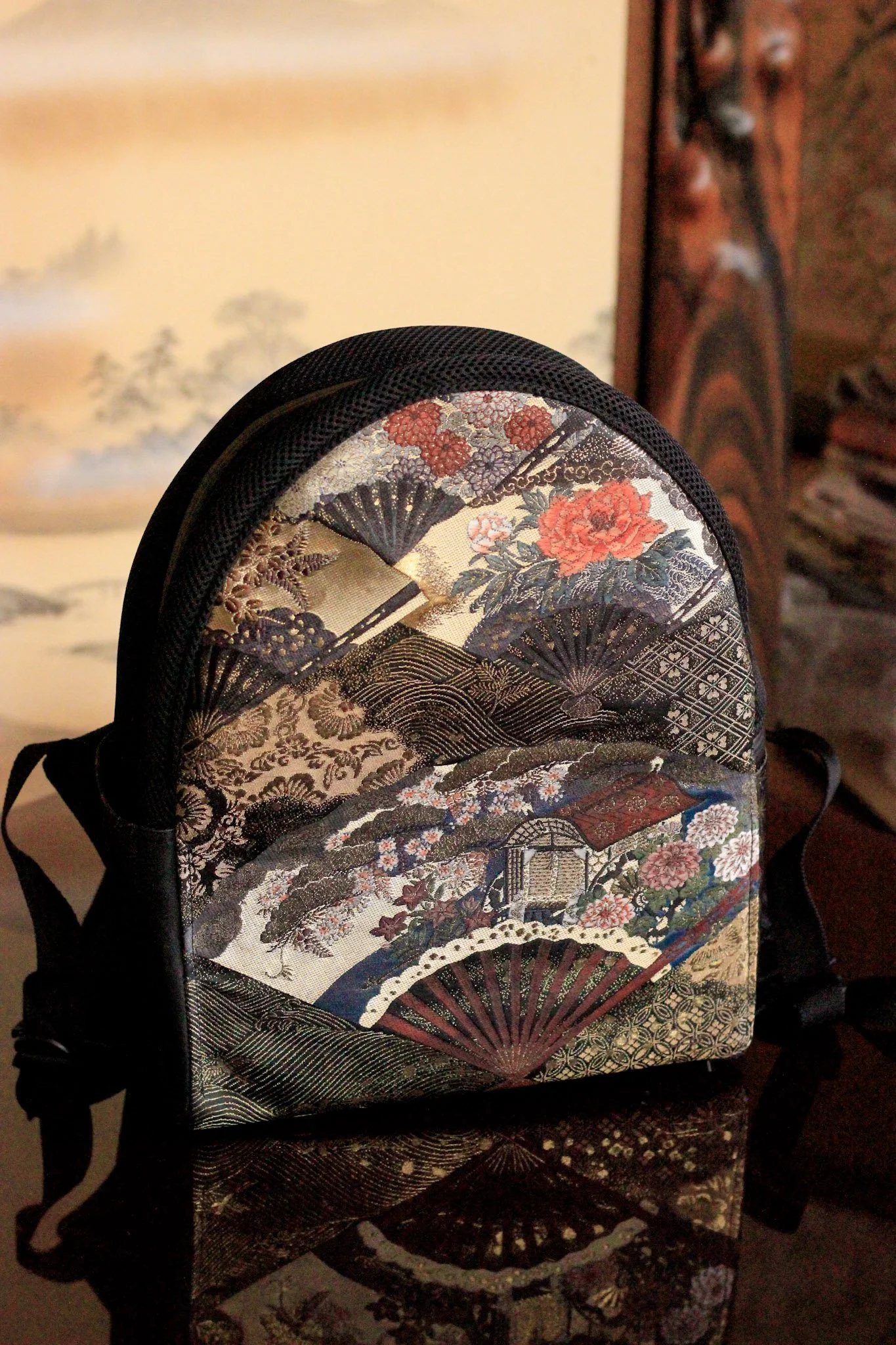
Backpack with floral folding fans. Custom orderd.
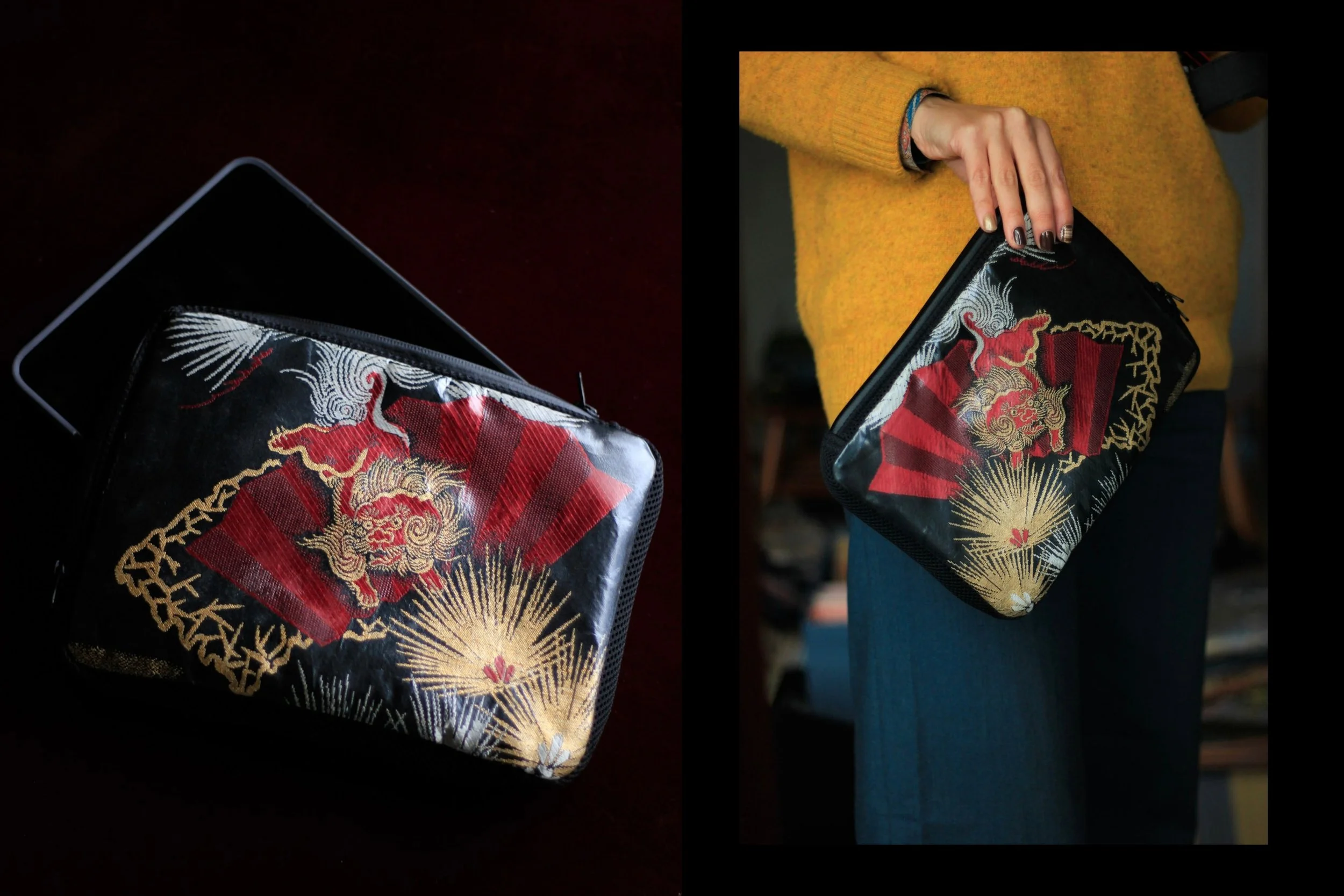
iPad Sleeve with Shishi lion and pine branches. Custom ordered.
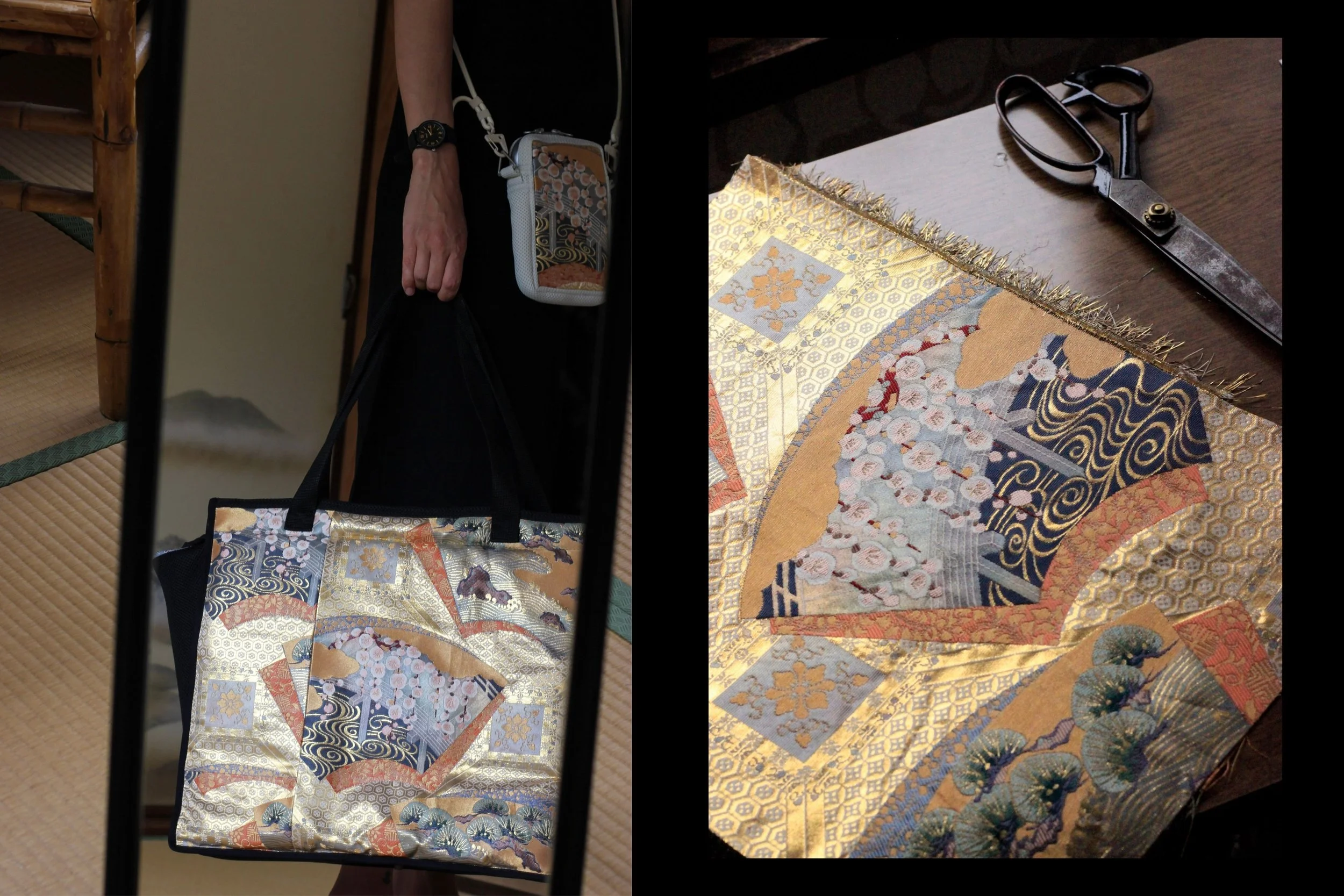
Weekender bag with plum blossoms and rivers on painted fans. Custom ordered.
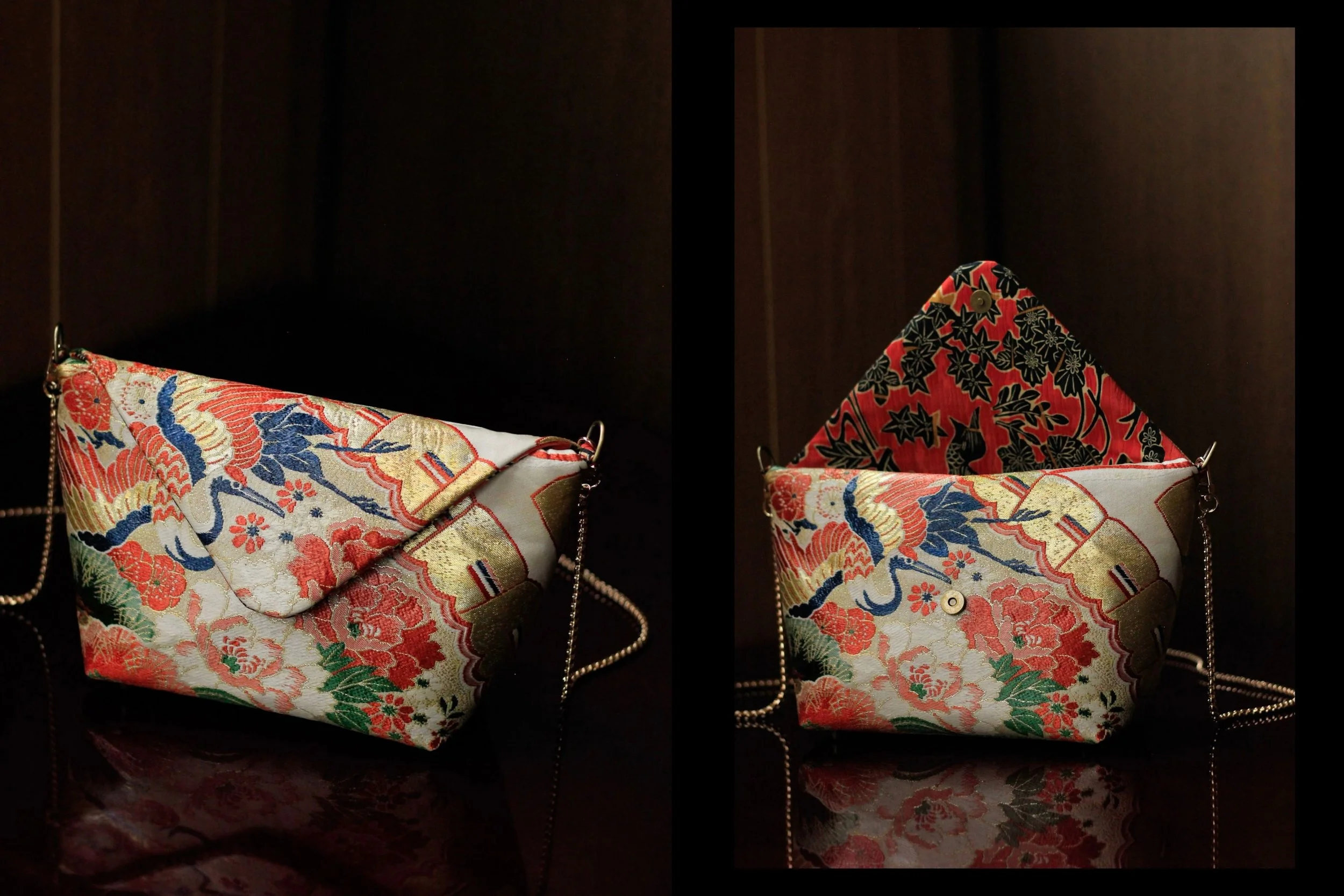
Clutch with wodden fan and crane. Custom ordered.
About Mikan Bags

Clémentine Sandner, the mind and hands behind Mikan Bags, in her Kyoto studio. (photo by Bruna Luise, 2024)
Hello, I’m Clémentine, a French designer living in Arashiyama, Kyoto. Since 2016, I’ve been creating bags from antique Japanese textiles. I fell in love with these fabrics because of how beautifully they express nature, seasons, and traditional craftsmanship.
I wish to create unique handmade bags that let us appreciate these textiles in our daily lives.
If you’d like to visit my studio and browse the collection in person, feel free to get in touch.
You can also explore a curated selection of existing bags online.
And if you’re feeling crafty, join one of my workshops and take part in creating your own Kyoto souvenir bag!