
Aoi Matsuri
葵祭
Motif
Among Kyoto's most celebrated annual events, the Aoi Matsuri (Hollyhock Festival) is one of Japan's oldest festivals, with origins dating back over 1,400 years. Every May, a procession of more than 500 participants dressed in authentic Heian-period costumes travels from the Kyoto Imperial Palace to the Shimogamo and Kamigamo Shrines, recreating the splendour of the imperial court.
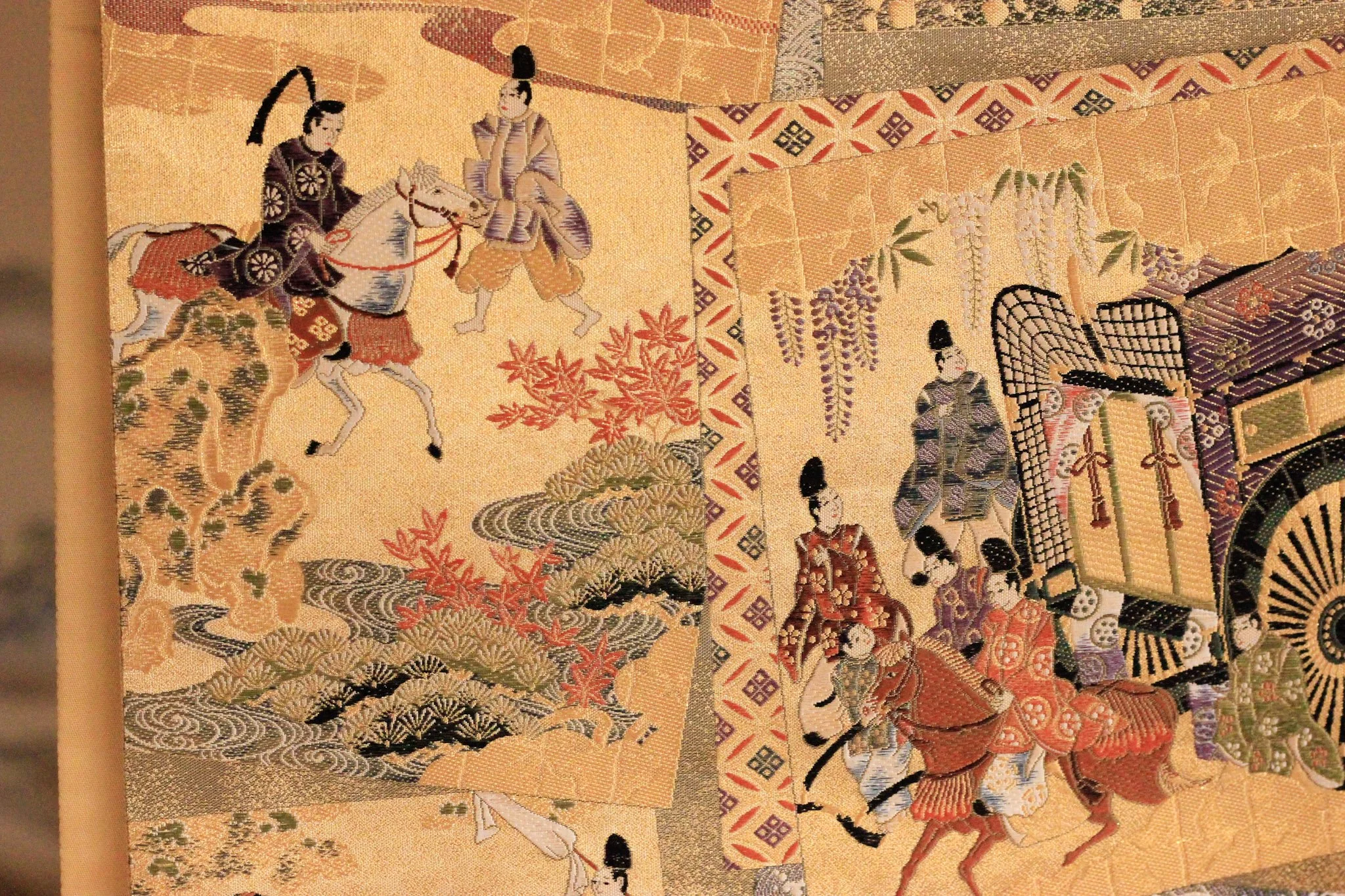
Rather than depicting a single moment of the festival, this obi unfolds as a series of miniature scenes inspired by the world of the Heian aristocracy, which I list and interpret below.
1. The Imperial Messenger and Ox (top left and bottom left)
This likely represents part of the Roto no Gi, the grand festival procession that travels from the Imperial Palace to Shimogamo and Kamigamo Shrines. Oxen were used to pull ceremonial carriages for high-ranking members of the court.
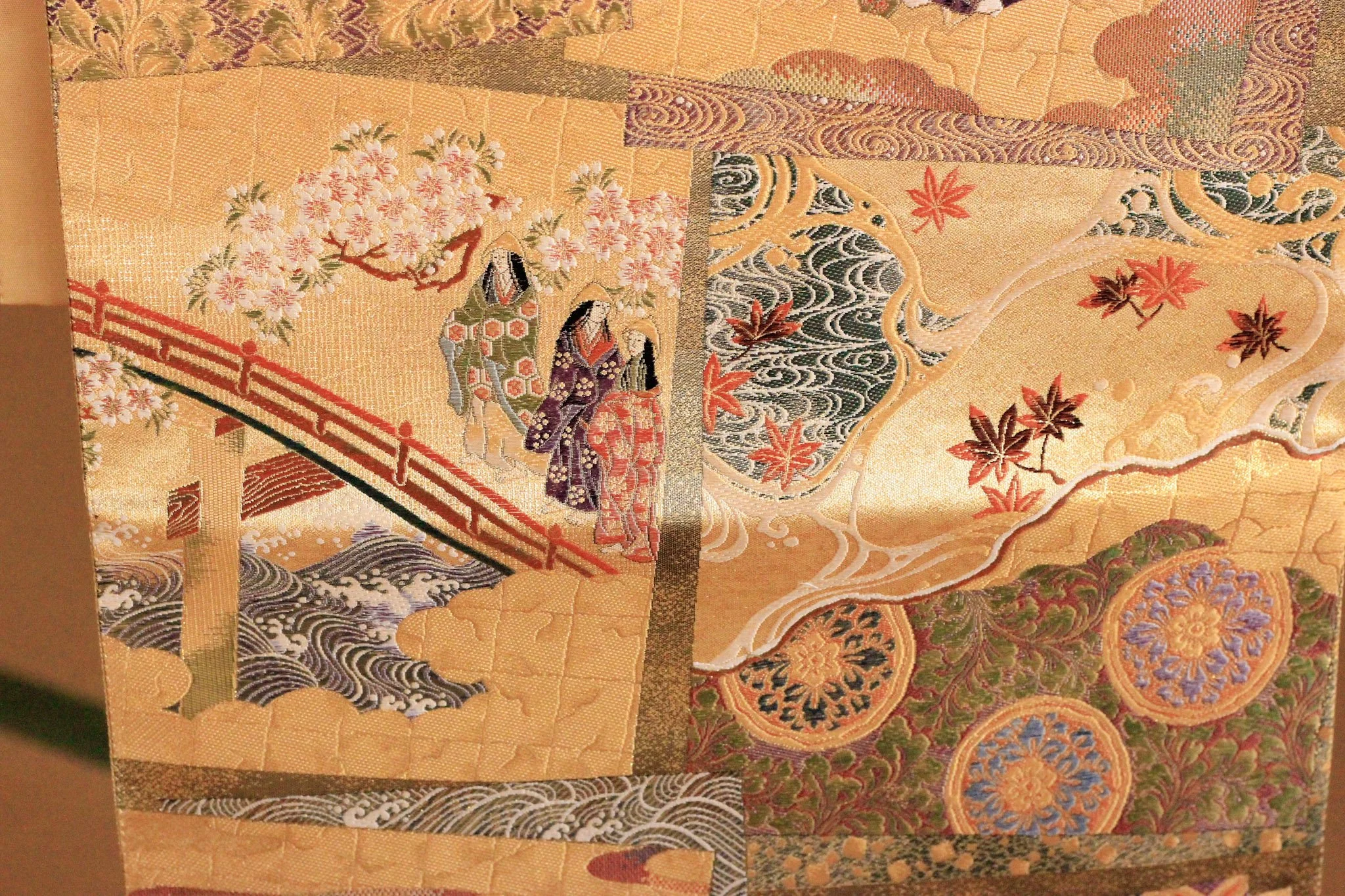
2. Cherry Blossom Gathering (centre left, above)
The bridge beneath blooming cherry blossoms may seem surprising, since Aoi Matsuri takes place in May after sakura season. Rather than depicting the festival day itself, this scene represents the aristocratic tradition of seasonal outings, a hallmark of Heian life. It reminds the viewer that the court celebrated each season through elegant gatherings.
3. Autumn Landscape (centre right, above)
The maple leaves, pines, and mounted nobles introduce autumn into the composition. Like the cherry blossoms, they broaden the narrative beyond a single day, celebrating the beauty of the four seasons that permeated Heian aesthetics.
4. Gosho-guruma (centre right, below)
A black-lacquered ox-drawn carriage from the Heian period, adorned with seasonal flower garlands. This replica is parading during Aoi Matsuri and is draped with cascading artificial wisteria (fuji) and sacred hollyhock (aoi) leaves.
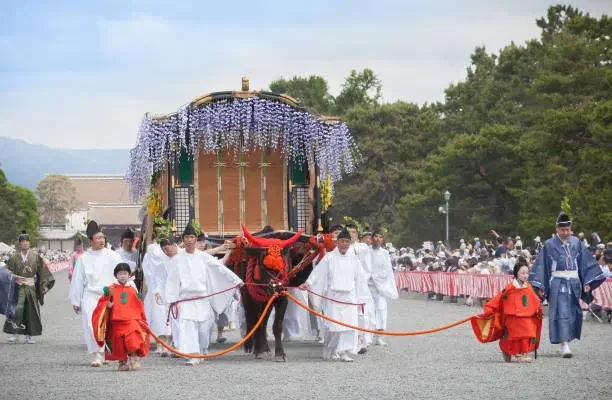
image: Diamond Visionary
5. Mounted Archers (centre left, below)
I believe this image refers to the Yabusame Shinji, an archery ritual performed at Shimogamo’s sacred forest before the festival.
6. Purifying Water Ritual (top right and bottom right)
Dressed in a formal twelve-layered Heian-period silk kimono (junihitoe), the Saio-dai (the chosen representative of the ancient imperial princess) cleanses her mind and body in water. This purification takes place at Shimogamo Shrine and Kamigamo Shrine on alternating years, using the shrine's Mitarashi pond or stream. It’s probably why swirling streams are very present on this obi in general.
Bonus: Gold Clouds
This element is found in all the vignettes. The gold clouds divide the composition, just as they do in classical emaki (illustrated handscrolls). They allow multiple moments to exist side by side, almost as if you're leafing through memories of the festival.
Framing
When ordering a bag, you can choose which vignettesf to feature on the bag. For larger bags, all elements of the motif will appear.
Previously made in this fabric
Small Travel Pouch
In-person workshop in Kyoto
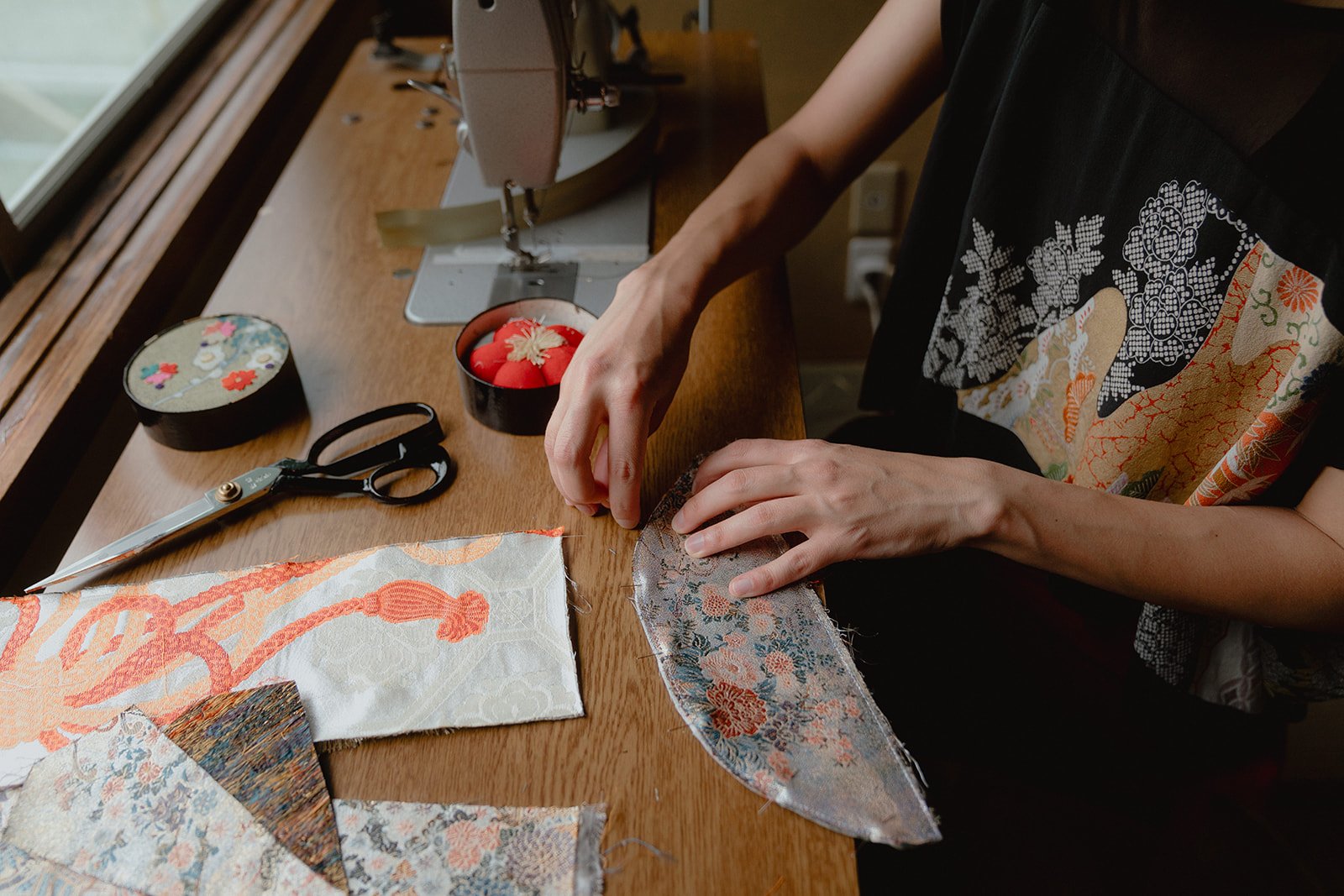
If you are visiting Kyoto and would like to spend some time discovering these fabrics in person, you are welcome to visit my studio.
Together, we will design your bag from A to Z. You will choose your favourite obi and even cut the fabric yourself, selecting the exact part of the motif you love most.
I will then carefully sew and finish your bag and ship it to you once it is complete.
→ Book a studio visit and experience the fabrics with your own eyes