
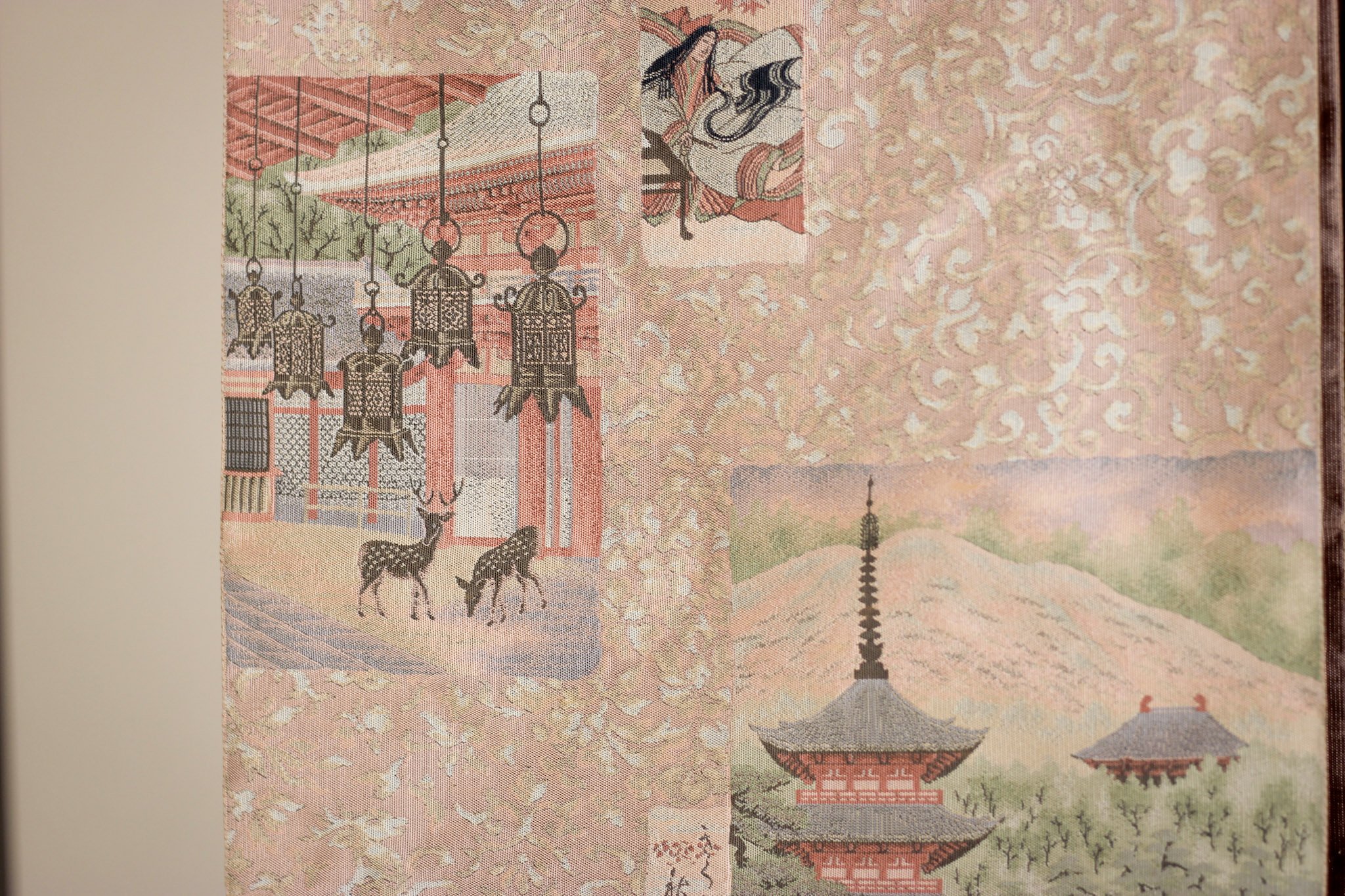
Nara
Featured on this obi
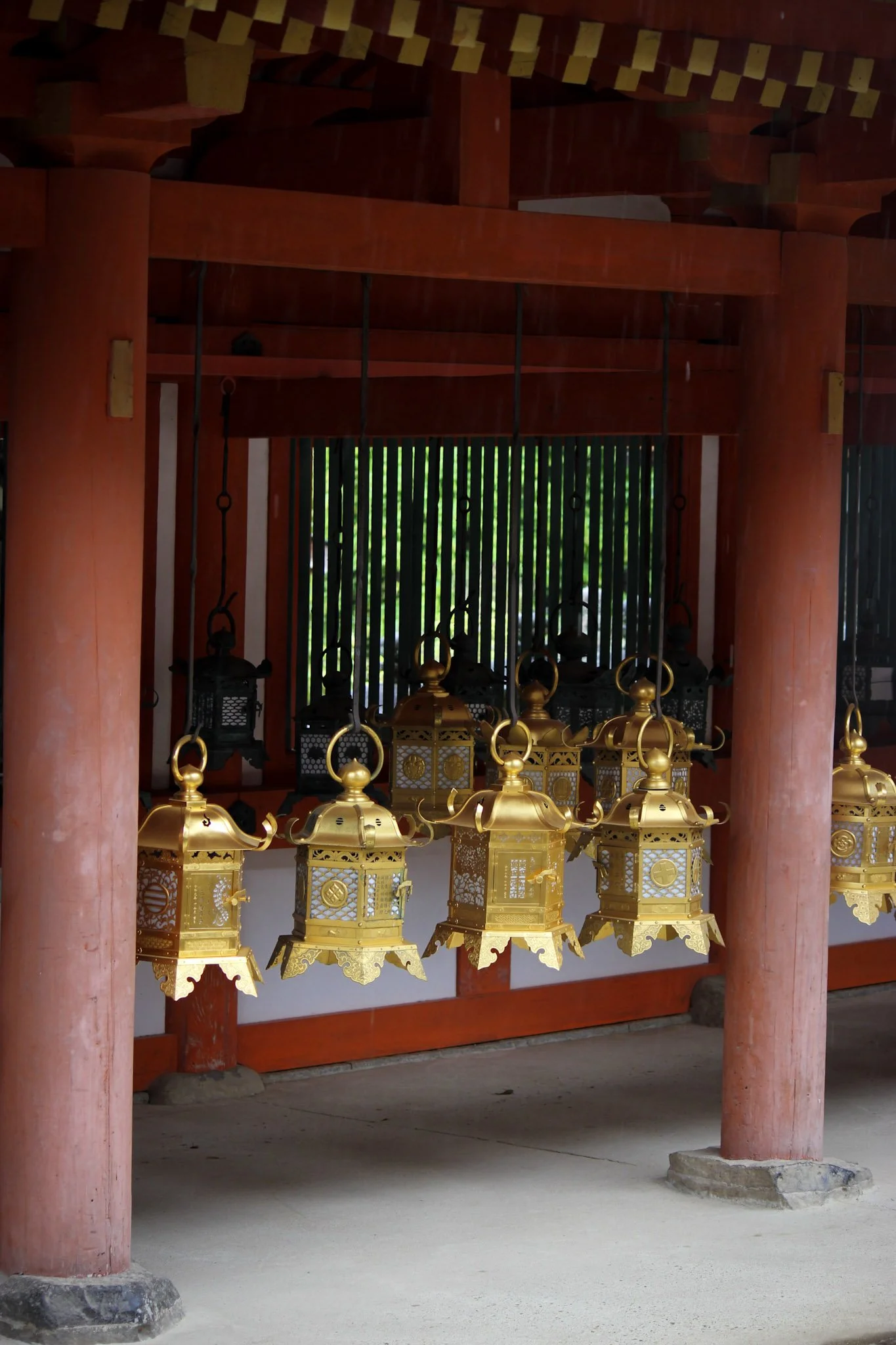
Kasuga Taishai and its mezmerizing collection of lanterns
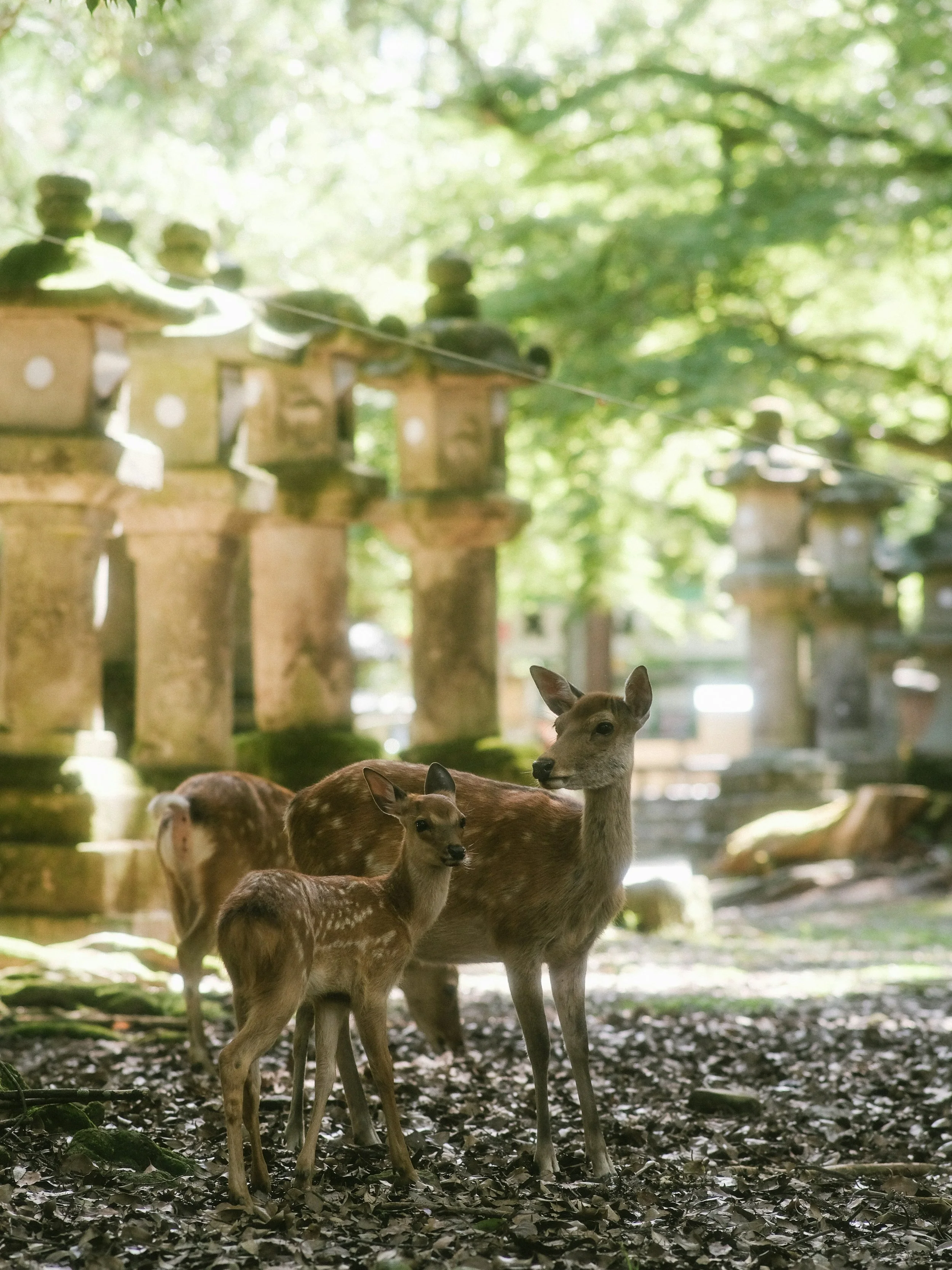
Nara’s famous sacred deers (Photo María Cosmen)
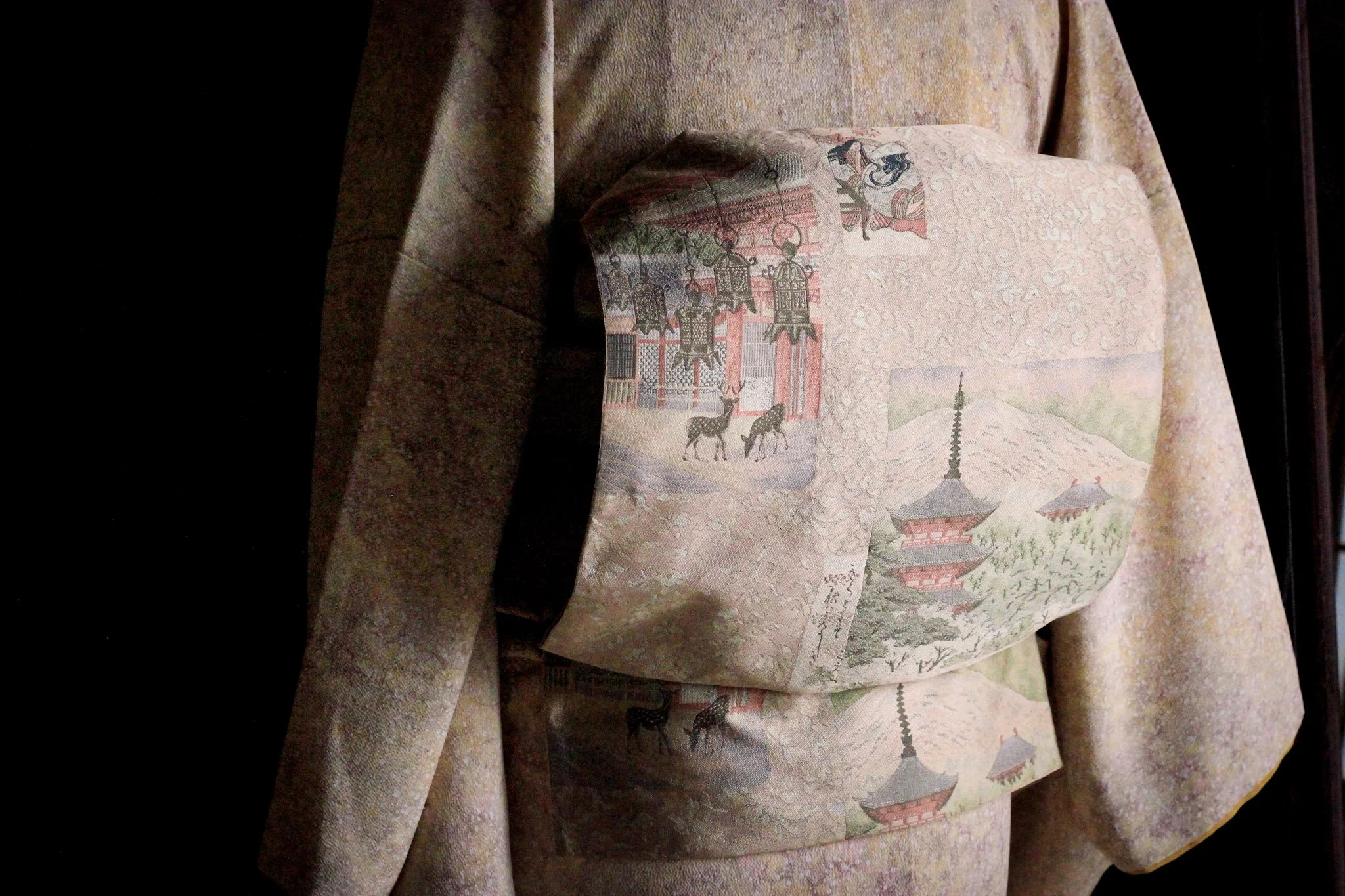
The obi worn one last time before being repurposed.
Motif
If you ever visited Nara, of course you remember the deers wondering around freely, but you might also have seen Kasuga Taisha, a beautiful shrine built about 1300 years ago, when Nara was the capital of Japan. The shrine is renowned for being the finest example of the Kasuga-zukuri architectural style, which dates back to the early 8th century and incorporates Chinese-style roofs and red, gold, and vermilion decorations. What I found particularly memorable when I visited is the vast collection of hundreds of bronze lanterns hanging all around the building. This obi depicts the. most symbolic elements of Nara: Kasuga Taisha’s lanterns, Kofukuji’s pagoda, and the sacred deers.
A small illustration also represents Murasaki Shikibu, the famed author of The Tale of Genji. I am wondering what connects the author to this specific shrine, and even if I’m not sure, I believe the two are not completely disconnected. Althought the author was born during the Heian period, when Nara was no longer the capital of Japan, Nara's early influence on Japanese culture would have shaped the world she inhabited and described in her famous novel. And the novel depicts a world influenced by the religious practices and cultural heritage from earlier periods, like Nara.
Composition
100% silk
Previously made in this fabric
Phone Bag

Ipad Pouch

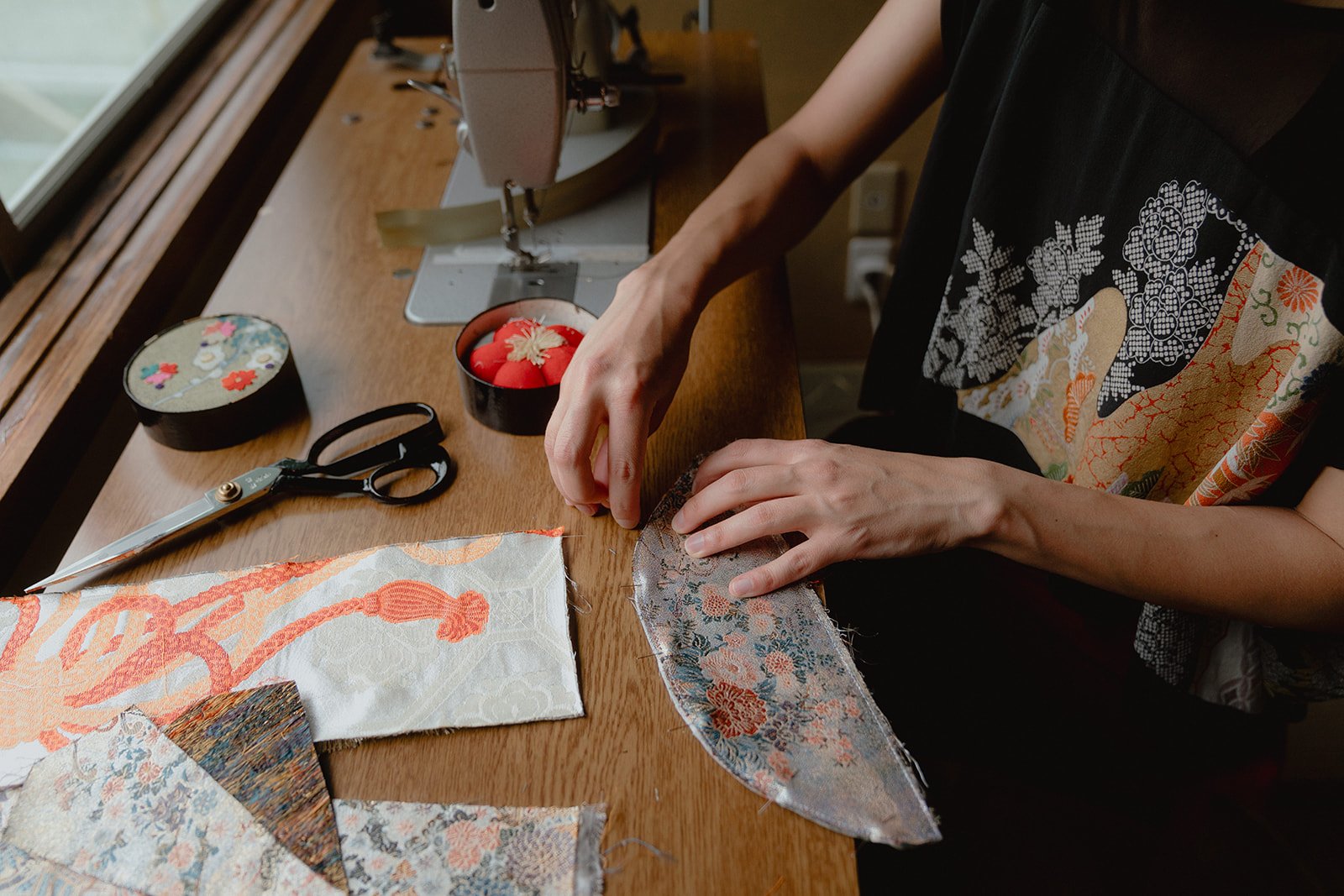
In-person workshop in Kyoto
If you are visiting Kyoto and would like to spend some time discovering these fabrics in person, you are welcome to visit my studio.
Together, we will design your bag from A to Z. You will choose your favourite obi and even cut the fabric yourself, selecting the exact part of the motif you love most.
I will then carefully sew and finish your bag and ship it to you once it is complete.
→ Book a studio visit and experience the fabrics with your own eyes