
The obi collection
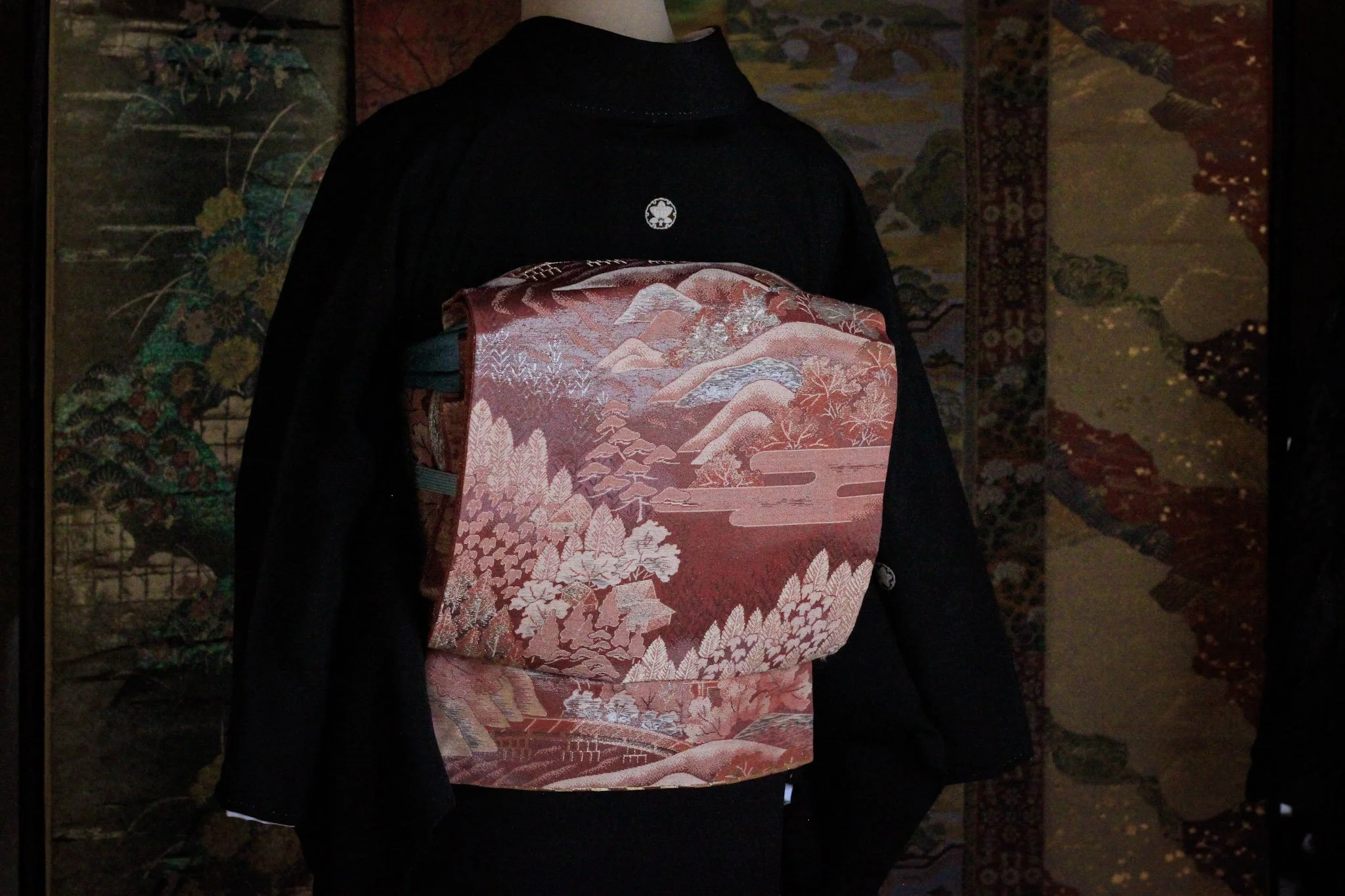
In my Kyoto studio, I collect and curate vintage and antique obi: traditional Japanese silk sashes once worn with kimono. Each piece is carefully sourced for its craftsmanship and the unique story it carries.
Often the most richly decorated part of the garment, these silk obi feature intricate woven scenes, from seasonal flowers to landscapes and cultural motifs. Many are formal pieces, adorned with gold threads and subtle shimmer, which makes them rarely worn today. By transforming them into bags, I wish to give these textiles a new life, allowing their beauty to be carried and used every day.
This page invites you to explore these vintage obi fabrics by theme and discover the diversity of Japanese textile design. Whether you are choosing a fabric for a custom bag or simply browsing, each piece offers a glimpse into the artistry and heritage of Japan.
Floral & Seasonal Motifs
From plum blossoms to chrysanthemums, these motifs echo the cycling of the seasons, the passing of time and the beauty found in each of them.
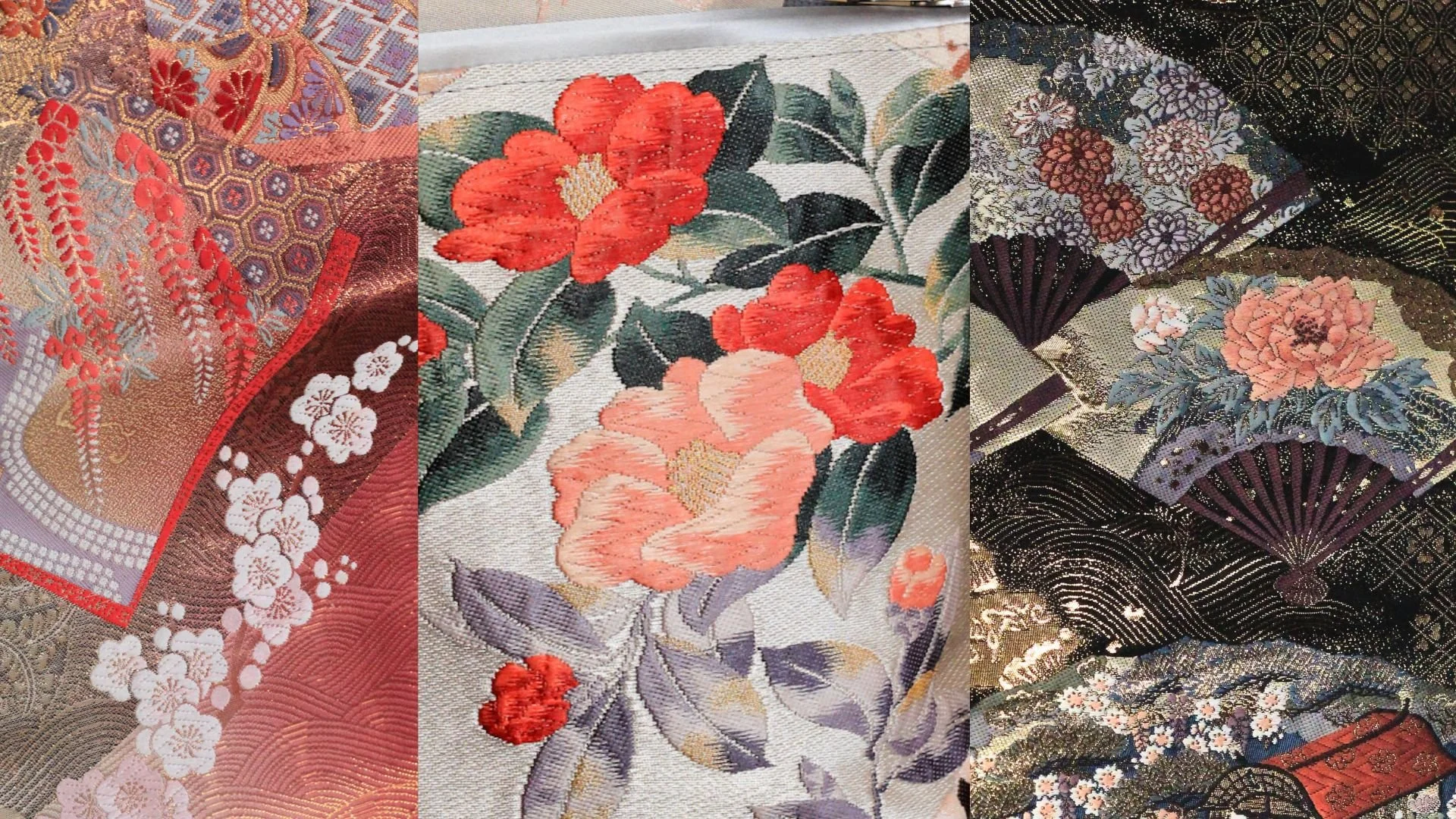
Plum blossoms, camellias, peonies, irises, and more.
Landscapes & Iconic Places
Some obi capture glimpses of Japan’s landscapes—temples, bridges, and distant mountains—like fragments of a journey woven into silk. They evoke places both real and remembered.
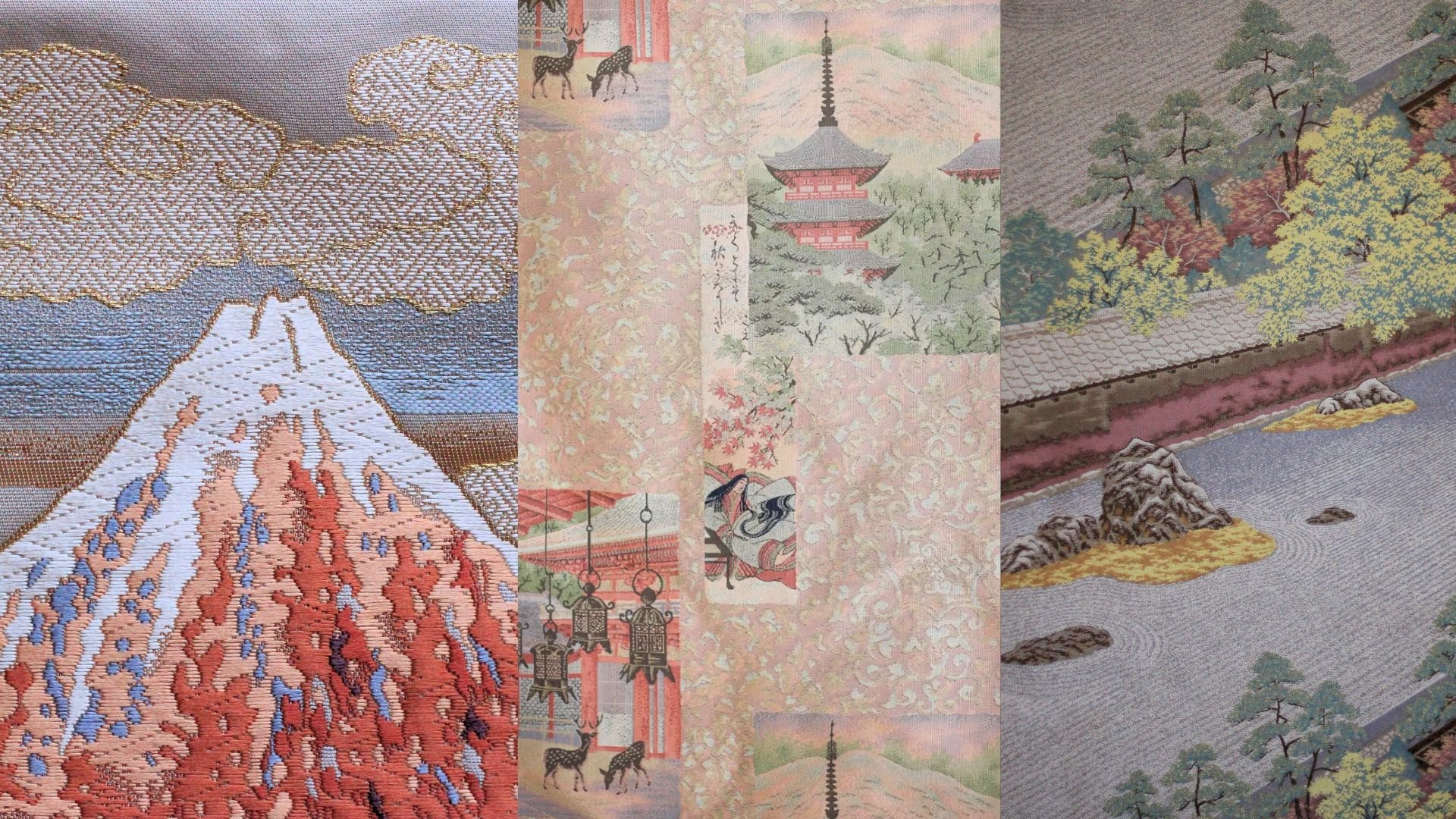
Mount Fuji, Kyoto’s zen gardens, Nara’s deer shrine, and more.
Birds & Symbolic Animals
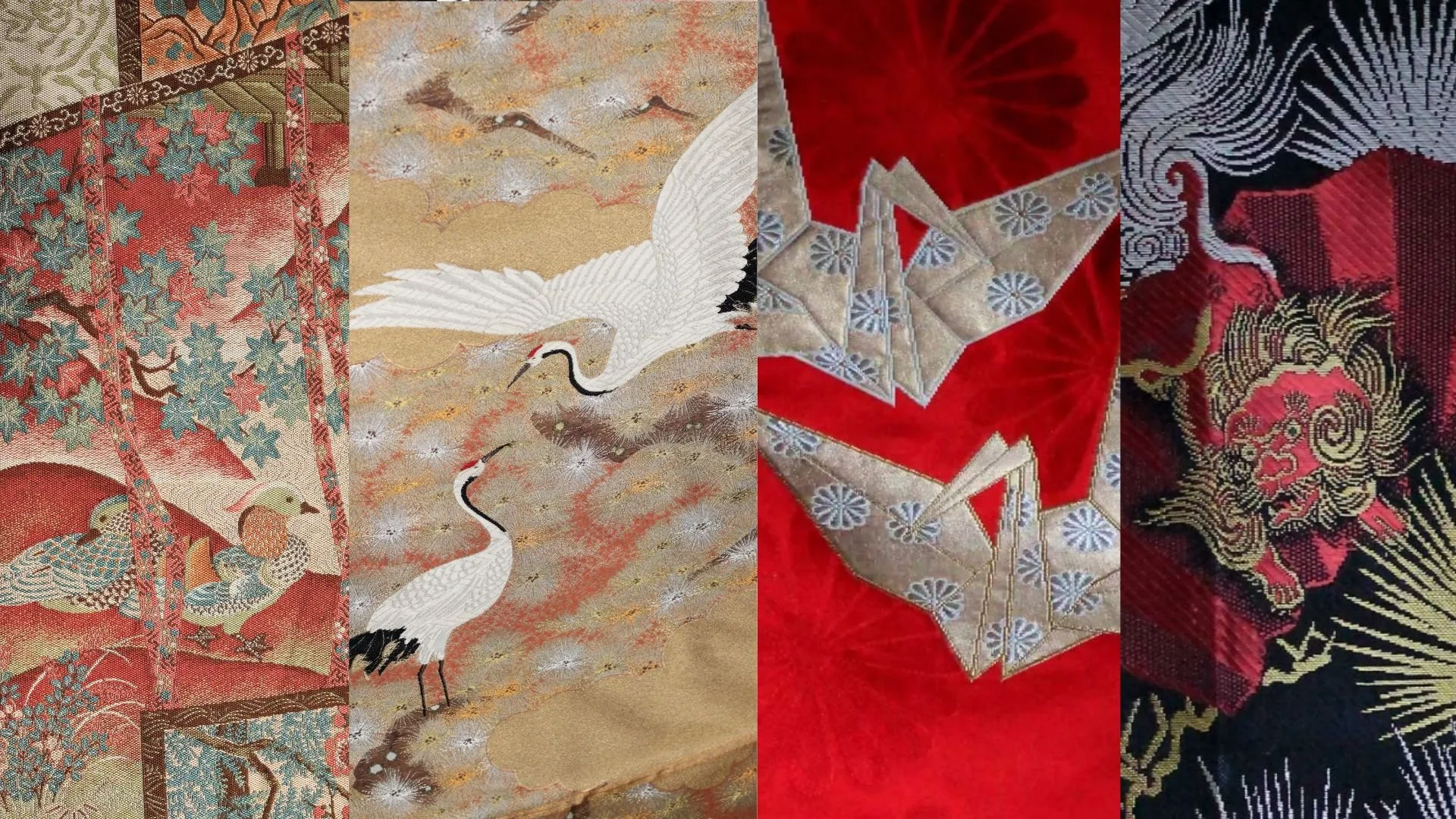
Cranes, butterflies, and other creatures carry layers of meaning in Japanese culture, often associated with longevity, transformation, or good fortune. These motifs bring a quiet symbolism to the fabric.
Mount Fuji, Kyoto’s zen gardens, Nara’s deer shrine, and more.
Historical Scenes & Stories
These obi unfold like stories, depicting scenes inspired by classical literature, court life, and historical imagery. Each one invites a closer look, revealing details that emerge over time.
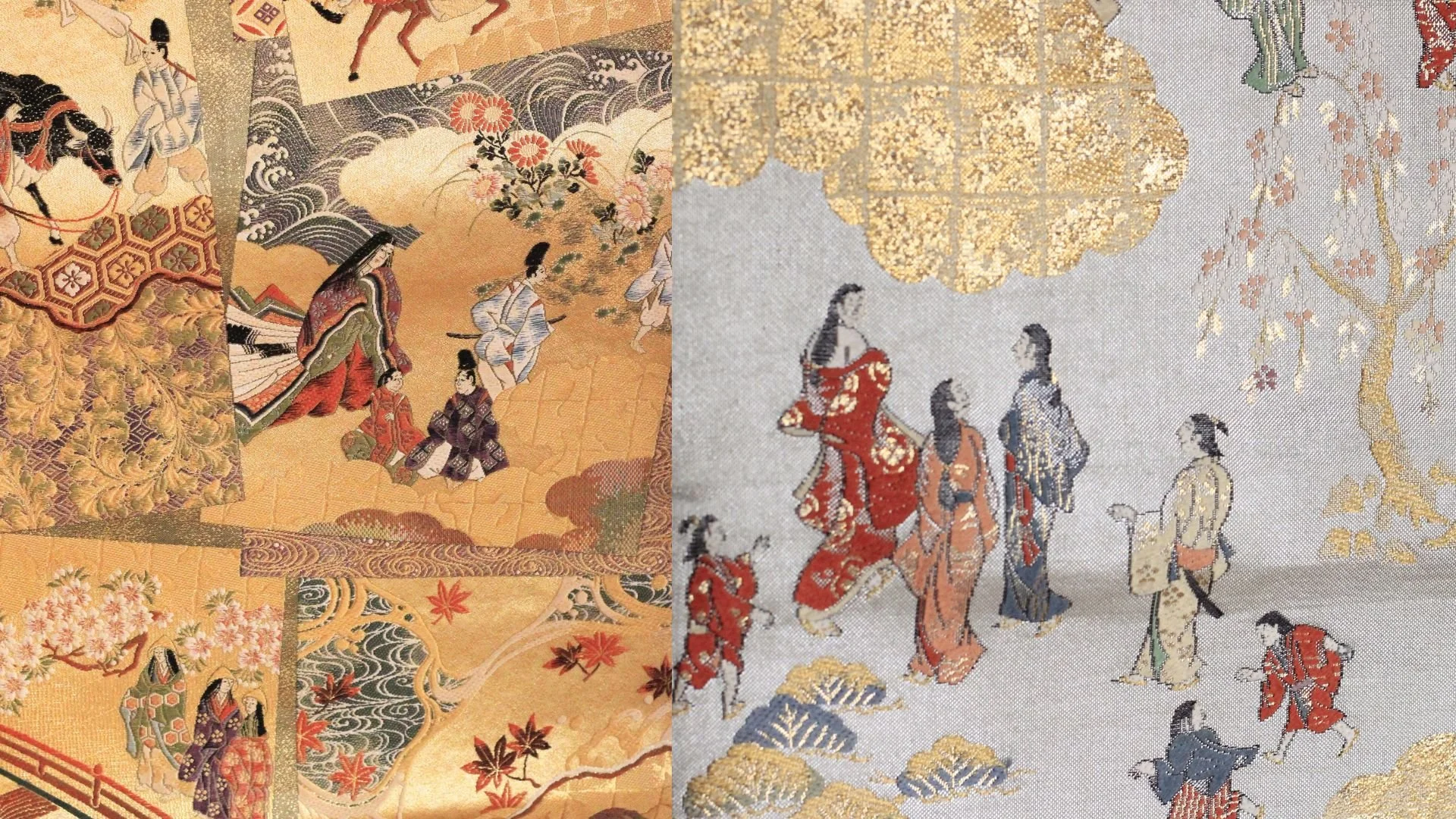
Mount Fuji, Kyoto’s zen gardens, Nara’s deer shrine, and more.
Wagara: Japanese Traditional Patterns
Wagara are traditional patterns built on repetition and balance. Geometric yet expressive, they reflect a refined sense of rhythm that has shaped Japanese design for centuries.
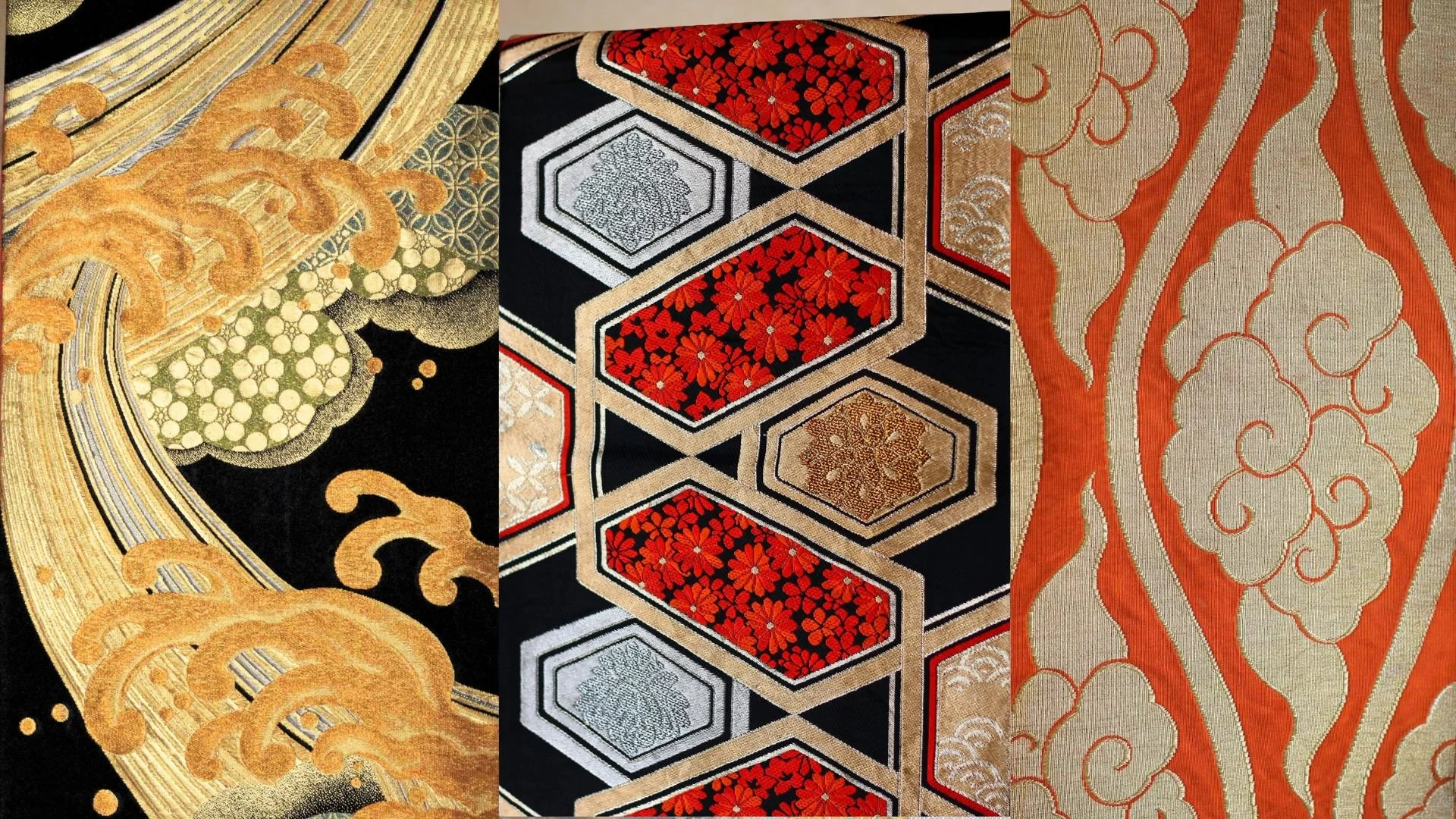
Mount Fuji, Kyoto’s zen gardens, Nara’s deer shrine, and more.