
Bamboo in Kyoto: Forests, Culture, and Textile Inspiration
People often ask me, “Why is the Arashiyama bamboo grove so famous?”
I believe its popularity is deeply connected to the history of western Kyoto, and more broadly to the place bamboo holds in Japanese culture.
For centuries, bamboo has been part of everyday life in Japan: in houses, tools, crafts, rituals, and even on the plate as a seasonal delicacy. It remains especially present in traditional practices such as the tea ceremony.
For those of us living here, bamboo is not a decorative plant. It is a neighbour.

Strolling around the bamboo grove, admiring its simple beauty.
Local bamboo history and culture
The western part of Kyoto was once a villa and retreat zone for aristocrats and nobility, prized for its scenic beauty and fertile land.
Before the city expanded into concrete and asphalt, these hills and plains provided ideal conditions for bamboo cultivation. Bamboo was not ornamental here; it was a precious material used for building construction, baskets, everyday tools, and crafts. Managing and harvesting bamboo was part of local life, and Nishikyo became one of Kyoto’s important bamboo-producing areas.
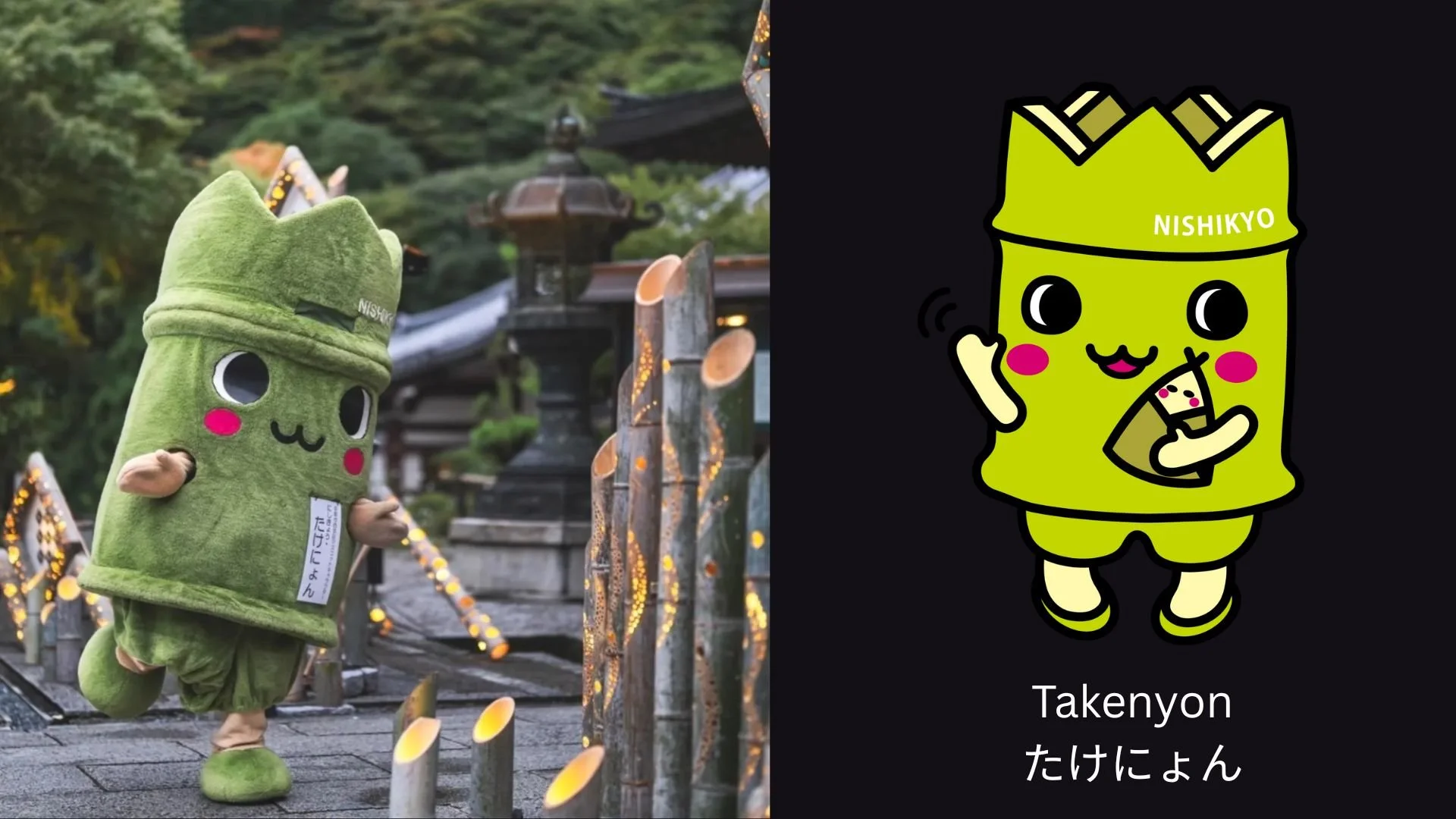
Even today, local communities still organize bamboo-related activities, sharing knowledge that has been passed down through generations. And as a charming reminder of this identity, the ward mascot is, of course, a smiling bamboo stalk called Takenyon (たけにょん).
Bamboo as a symbol
Bamboo grows incredibly fast — on average, 30 to 50 cm (12 to 20 inches) per day, and in peak conditions, even close to one meter (about 39 inches) in a single day. It bends without breaking, resists storms, and can be shaped through heat, a little like metal.
Because of this, bamboo has long symbolised resilience, flexibility, and quiet strength in Japan. It is also a rare plant that is not only useful, but edible. Bamboo shoots (takenoko) are a beloved seasonal delicacy in spring, enjoyed for both their flavour and their symbolic vitality.
Bamboo also holds an important place in Japanese mythology, and it is believed that when eaten, it can pass on its strength. As in many ancient beliefs, eating something was thought to help you absorb its power. Luckily, bamboo shoots also happen to be delicious.
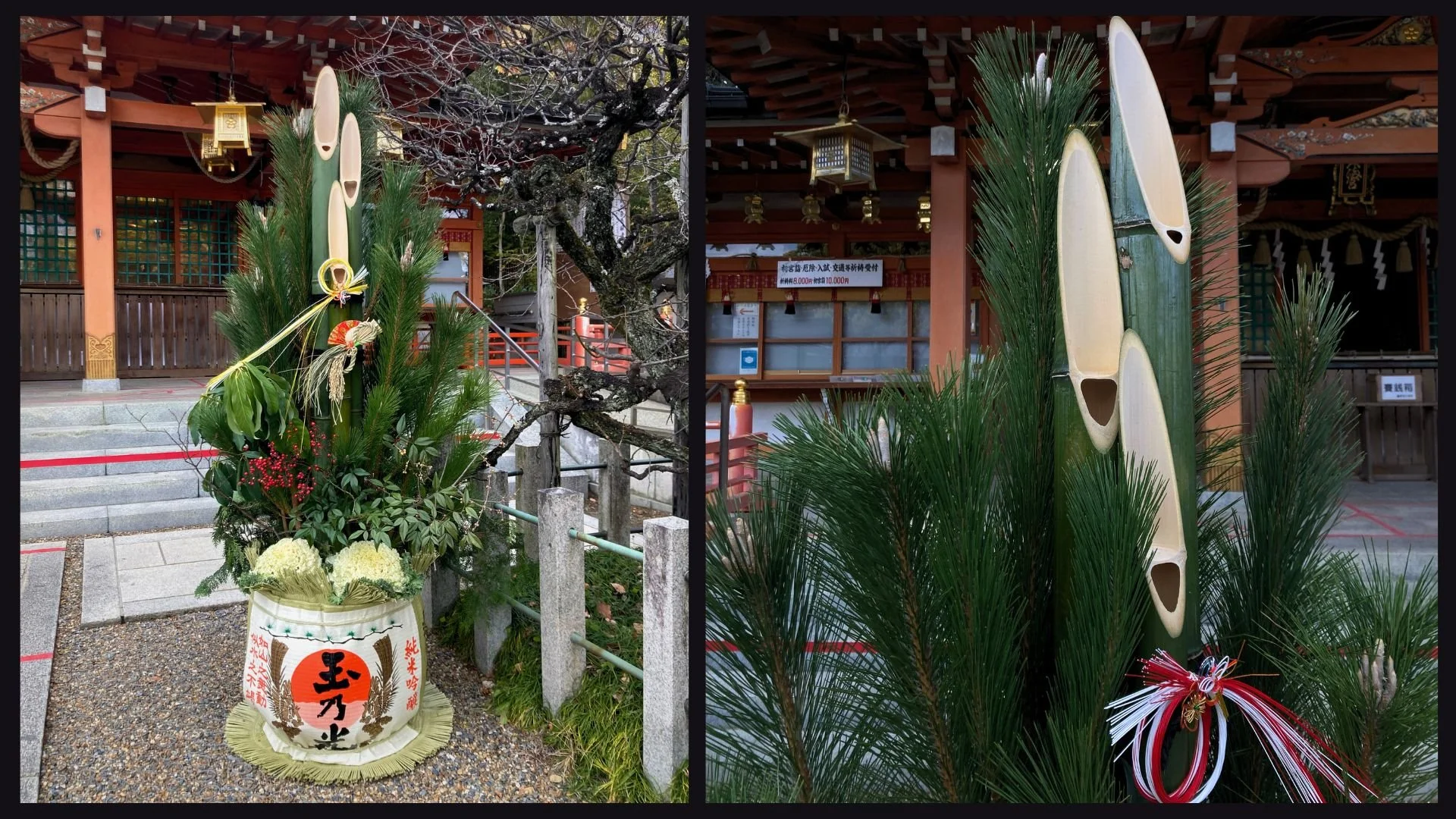
As the end of the year approaches, you will start seeing these decorations across Japan. Called Kadomatsu, they are traditional New Year ornaments made with bamboo and pine, and yes, this is the idea behind the 🎍 emoji.
Quiet bamboo places in Kyoto (without the crowds)
If bamboo speaks to you and you would like to experience it in a quieter way, here are a few places I recommend in western Kyoto:
Rakusai Bamboo Grove & Bamboo Park
A city-run project with a very local atmosphere, where you can walk among many different bamboo species and learn more about bamboo as a material. You can stroll through the groves and visit the small bamboo museum, which showcases bamboo craftsmanship with information available in English.Jizo-in Temple (also called the “Bamboo Temple” Take-dera)
Surrounded by bamboo groves, this temple offers a peaceful visit away from the crowds. You can sit quietly and contemplate the moss garden.Bamboo Coffee
Created to preserve a remarkable bamboo artwork from the 1950s, this café is housed in a fully bamboo-made building. And if you sip a coffee or a matcha latte in the back room, you can appreciate the bamboo architecture from the inside, with bamboo mosaics surrounding you.A summer river escape near Saihō-ji (the Moss Temple)
If you walk past Saihō-ji and continue into the forest, following the main path to the gate, you’ll reach a spot where you can cool down in summer by dipping your feet in the river, just like locals do. If you walk past the gate, you can also find a deeper pool where you can swim on especially hot days.
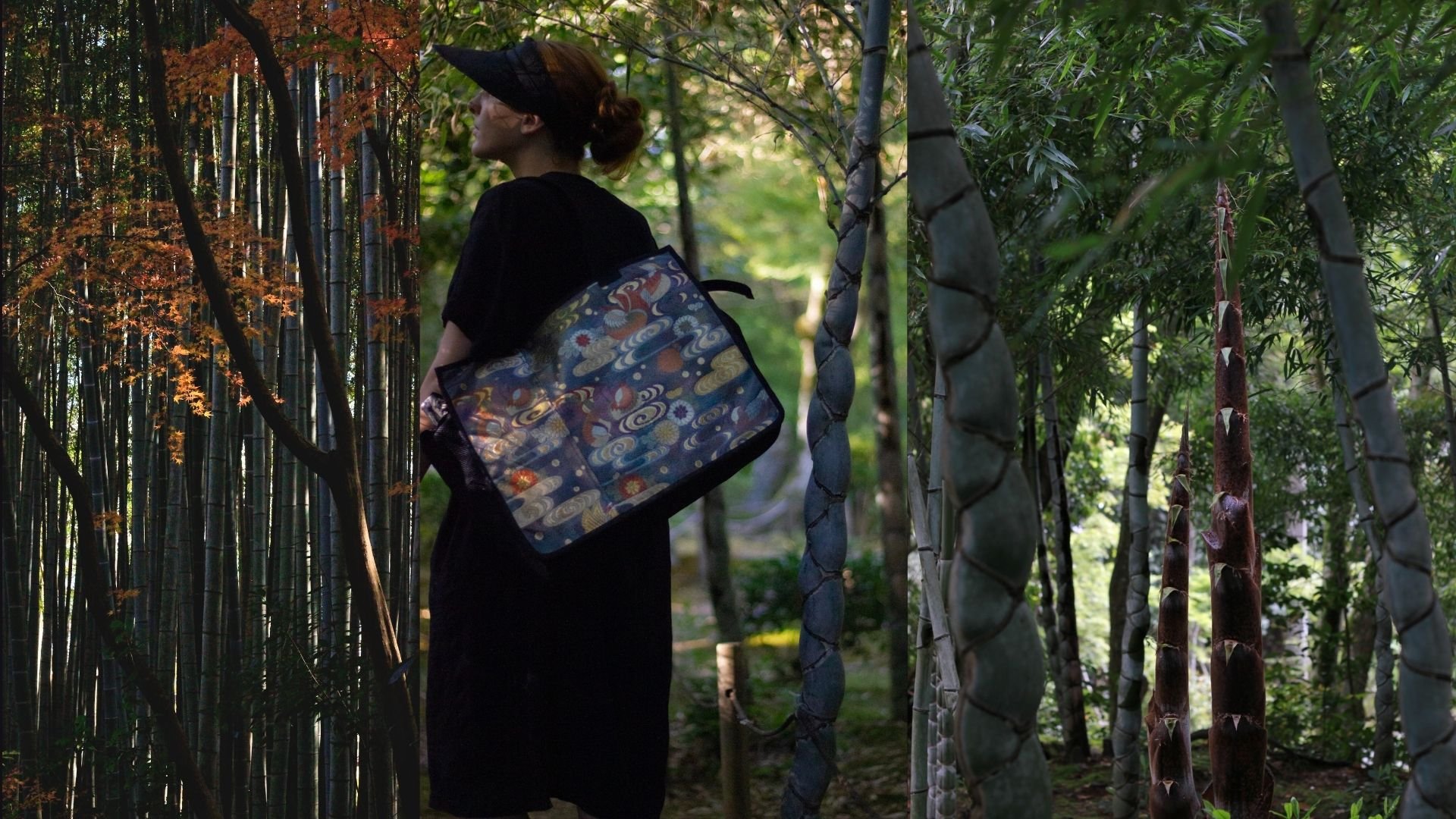
Strolling through the bamboo and the seasons: Jizo-in in the fall, Rakusai Bamboo Park and the shooting Takenoko in the spring.
From bamboo forests to textile inspiration
As in many forms of Japanese craftsmanship, artists are deeply inspired by their surroundings and by the rhythm of the seasons. Textile artisans and obi weavers are no exception.
When you walk through a bamboo grove, you quickly notice its strong visual rhythm. Tall vertical stalks repeat endlessly, structured yet organic. The shades of green evolve constantly, through the seasons, but also within a single day, sometimes deepening into blue tones, sometimes softened by light.
Experiencing this in person is always fascinating, and I love finding the same sensations translated into fabric, so that you can feel them again, simply by touching it.
Mikan Archives:
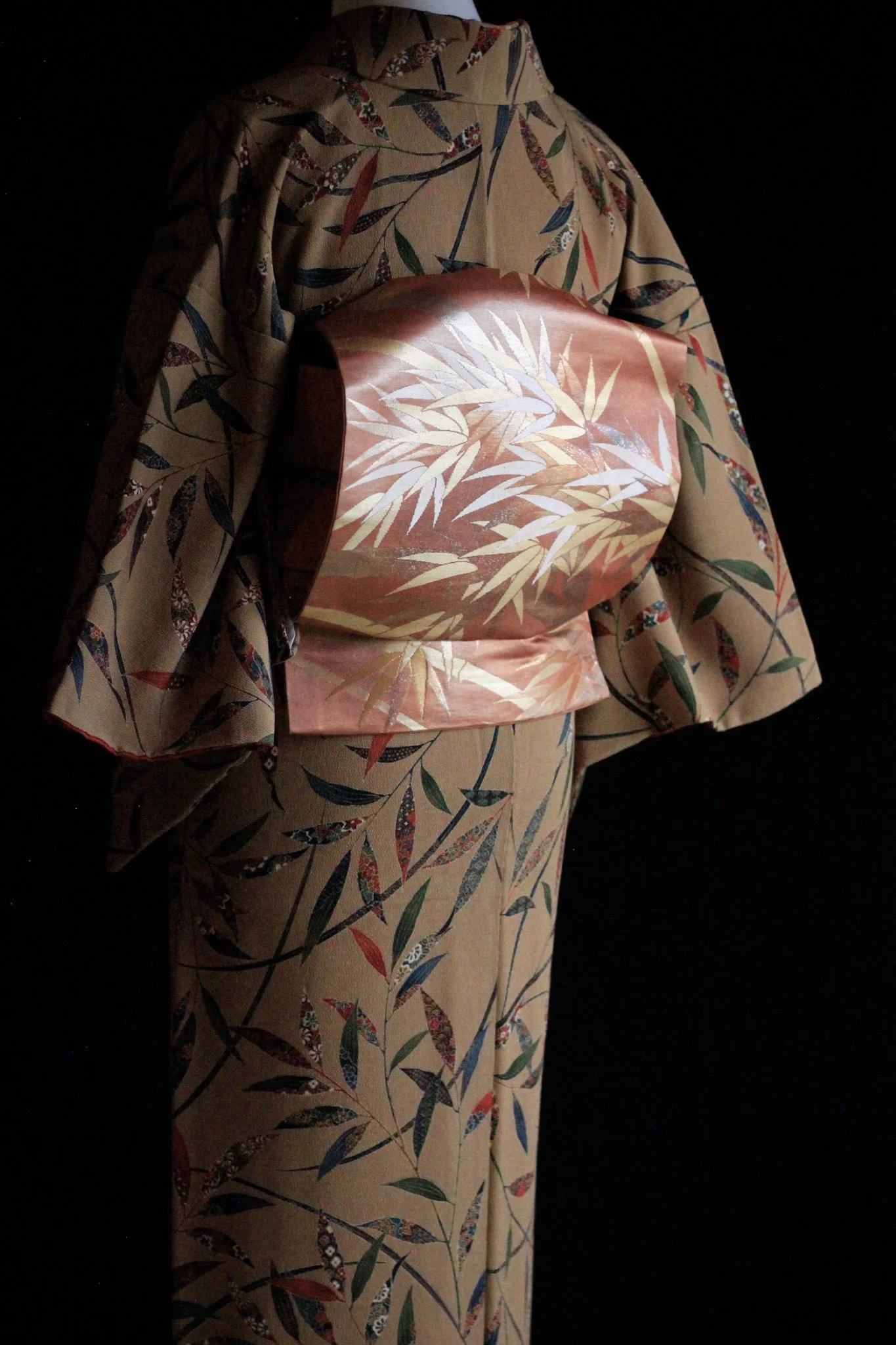
Matching bamboo motif on the woven obi and hand-painted komon kimono.
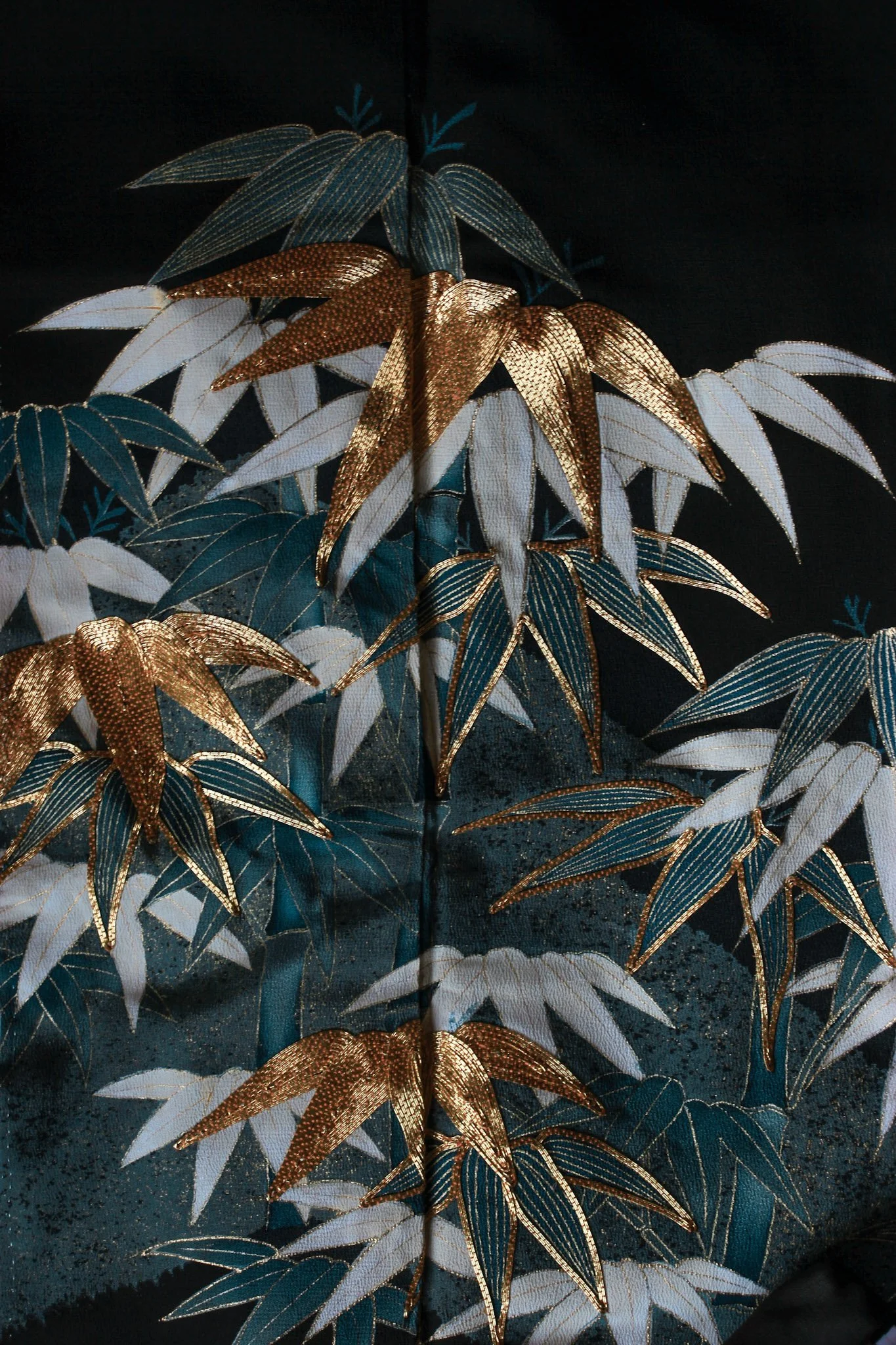
Bamboo leaves, hand-painted and embroidered with gold on a kuro tomesode kimono.
Picked fabrics
Like souvenirs of a stroll through a bamboo grove, or echoes of a beloved landscape, these fabrics caught my eye the moment I saw them.
The first one, vivid and rich in autumn tones, draws you in immediately. Just by looking at it, you can imagine yourself walking along a forest path, where the sunlight suddenly softens and fiery red and golden leaves crunch gently under your shoes.

Autumn Bamboo Grove obi, paired with tsumugi kimono decorated with sparrows and camellias.
The second, a pastel version of a similar bamboo-and-maple scenery, feels more dynamic. Here, there is no clear path to follow, only tall, slender bamboo dancing in the wind, gently leading you into contemplation.
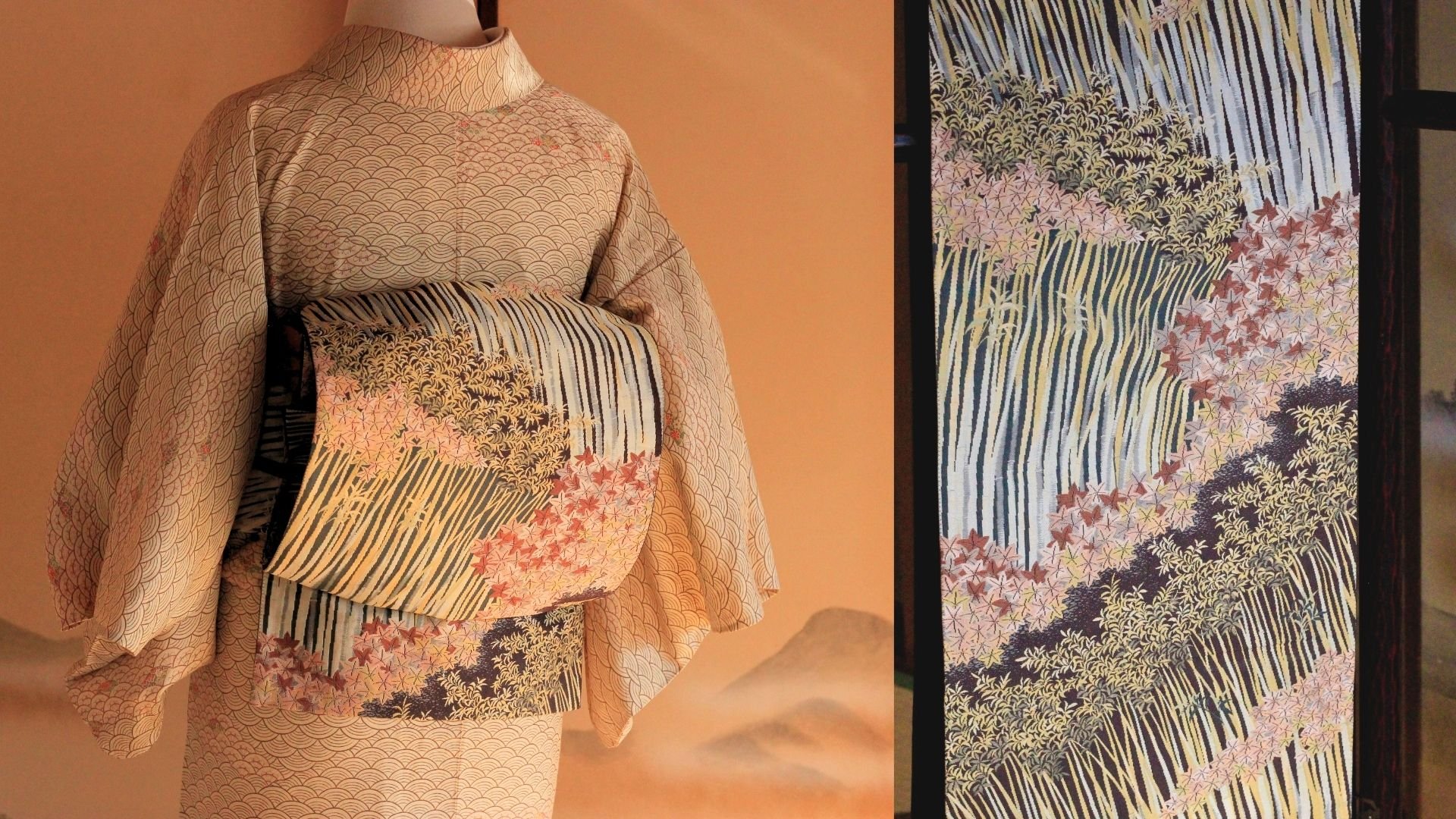
Pastel Bamboo Grove obi, paired with a kimono covered of seigaiha motif (little waves).
Both of these obis are Shōha-ori, a finely woven textile with a smooth, lightweight, and flexible texture.
They are available in my collection for a custom order.
About the author
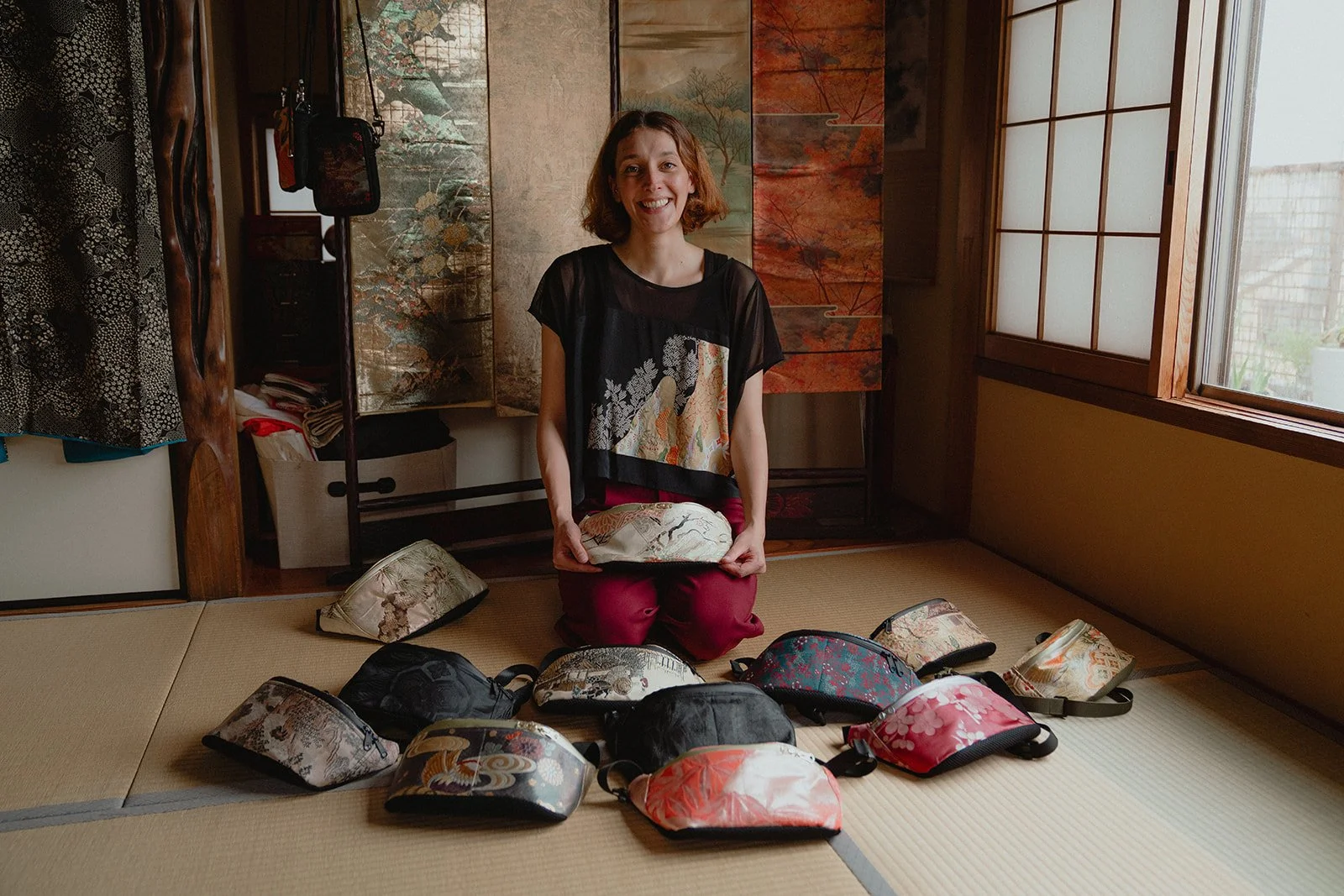
Clémentine Sandner, the mind and hands behind Mikan Bags, in her Kyoto studio. (photo by Bruna Luise, 2024)
Let’s create your Kyoto souvenir bag
Hello, I’m Clémentine, a French designer living in Arashiyama, Kyoto. Since 2016, I’ve been creating bags from antique Japanese textiles. I fell in love with these fabrics because of how beautifully they express nature, seasons, and traditional craftsmanship.
I wish to create unique handmade bags that let us appreciate these textiles in our daily lives.
If you’d like to visit my studio and browse the collection in person, feel free to get in touch.
You can also explore a curated selection of existing bags online.
And if you’re feeling crafty, join one of my workshops and take part in creating your own Kyoto souvenir bag!
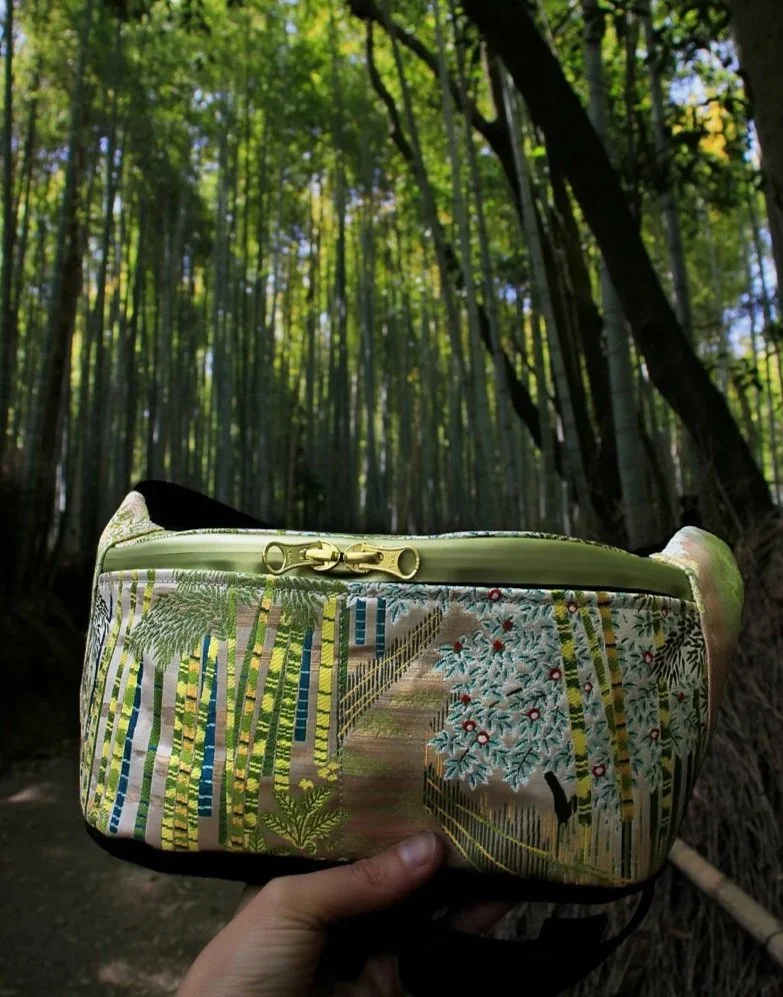
A souvenir bag to wear back home and carry a piece of Japan with you everyday.